Where do you get inspiration for your walks?

Where do you get your inspiration when you are going for a walk?
I found myself without any idea the other day. I had one glorious one in mind but it was far to late for train and ferry.
By a process of elimination, I chose the train towards Copenhagen and soon I found myself on Kalvebod Fælled on Vestamager, a place I have visit before.
But this time I decided I wasn’t going to walk these endless paths.
From the last time I knew there would be bikes for rent. Though I didn’t know how good the bikes were.
Now I’ve tried one and it was really great. I had an extraordinary ride with twinkling lights a blinking sea and wide open spaces where horses were grazing and birds foraging.
A group of children were swimming, and people went surfing further down the beach. A sailboat had crashed under one of the recent storms. A guy checked with the police who already knew about the ship.
I was so happy for the sun and the long bike ride that I forgot about the deadline for submission of the bike. It became a bit of rush at the end.
It is highly recommended. Not the rush but the bike ride!

Notes

You can download a map and read more about this stunning area; Kalvebod Fælled

Rent a bike: Friluftshuset

An Entertaining Stroll In The Citadel

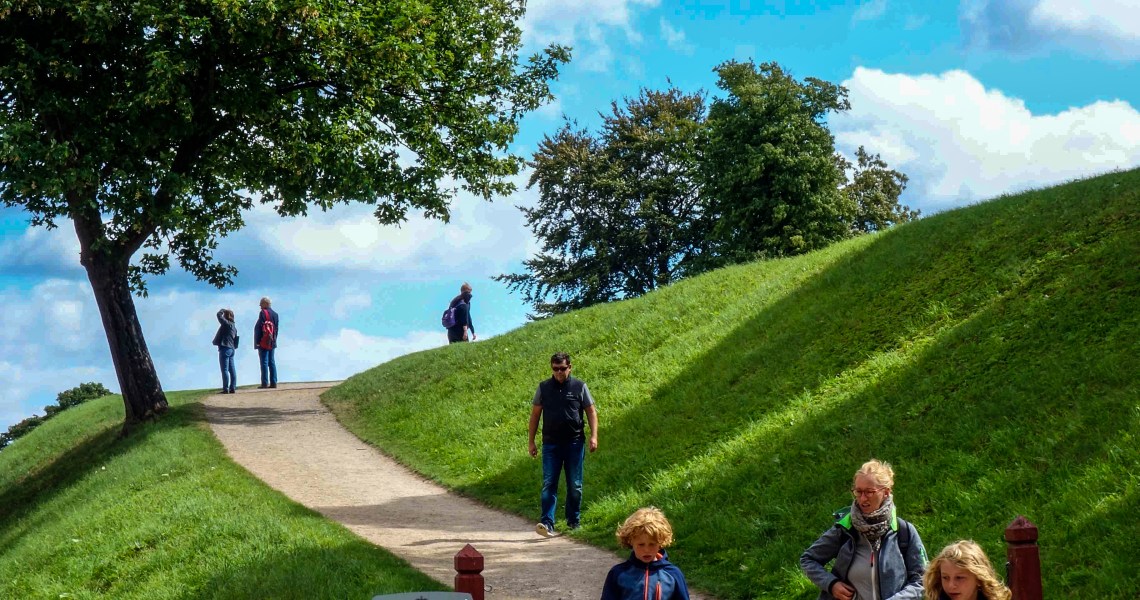
I’m standing on top of the Citadel’s ramparts looking over the harbour while swallows fly closely by. I am sure the birds benefit from the steep ramparts one way or another.

Particularly two traditions link the Citadel to the public holiday, Stor Bededag and the night before.

Best known is the custom of eating warm wheat buns on Stor Bededags evening. The reason is that not even the bakers were supposed to work from sundown the night before Stor Bededag and throughout the following day.
Therefore very large wheat buns were baked the day before which people could take home to heat and eat the next day.

However, the wheat buns were eaten the same night – while they were still warm and crisp.
Today it is possible to buy the wheat buns all over when Stor Bededag is approaching.

The second tradition normally associated with Stor Bededag, was the habit of Copenhagen’s bourgeoisie walking on the ramparts on the evening of Stor Bededag. The custom can be traced back to the 1700s and is said to be caused by the melodious chimes of Our Lady Church’s carillon, which lured people of Copenhagen out on a stroll to enjoy the newly sprouted, spring green linden and chestnut trees.

The carillon was set up in 1747 and destroyed by the British bombardment in 1807 the church’s spire was hit and crashed into the main building, which burned completely.

It seems that the tradition once again is popular among people from Copenhagen and every day might work

Notes
Useful information on this site: Copenhagenet.dk
Kastellet
Kastellet, Copenhagen, Wikipedia

The Mythological Gefion

The Gefion Fountain never stops to fascinate me. I came here as a child with my mother. Now I’m back as an adult being a tourist in my home town.

Gefion

Notes

The fountain depicts the mythical story of the creation of the island of Zealand on which Copenhagen is located. The legend appears in Ragnarsdrápa, a 9th-century Skaldic poem recorded in the 13th century Prose Edda, and in Ynglinga saga as recorded in Snorri Sturluson’s 13th century Heimskringla.

According to Ynglinga saga, the Swedish king Gylfi promised Gefjun the territory she could plow in a night. She turned her four sons into oxen, and the territory they plowed out of the earth was then thrown into the Danish sea between Scania and the island of Fyn. The hole became a lake called Lögrinn and Leginum (locative). Snorri identifies the lake Löginn, as the lake of Old Sigtuna west of Stockholm, i.e., Lake Mälaren, an identification that he returns to later in the Saga of Olaf the Holy. The same identification of Löginn/Leginum as Mälaren appears in Ásmundar saga kappabana, where it is the lake by Agnafit (modern Stockholm), and also in Knýtlinga saga.

In spite of Snorri’s identification, tourist information about the fountain identifies the resultant lake as Vänern[1] ,[2][3][4] Sweden’s largest lake, citing the fact that modern maps show that Zealand and the lake resemble each other in size and shape.

Snorri, however, was well acquainted with Vänern as he had visited Västergötland in 1219. When he referred to this lake he called it Vænir[5] Wikipedia

Add Colour To My Sunset Sky

Today I took the consequence, and found my winter jacket from the attic.
Cold, rain showers and strong winds, forget the summer clothes.
At Langelinie I spoke with a woman from Trondheim in Norway. Few minutes before that heavy rain squall had driven past.
The weather forecast promised sun all day she exclaimed to my complaints about the weather and I understood her frustration.

There is nevertheless comfort to find in this weather with huge cumulus clouds as in the quote by Rabindranath Tagore

Clouds come floating into my life, no longer to carry rain or usher storm, but to add color to my sunset sky.
by Rabindranath Tagore

View from Langelinie towards Trekroner Fort

________________________________________________

Trekroner Fort is part of an old fortification. A defence for Copenhagen against the Germans and The British at the end of the 1800s.

KØBENHAVNS FORSVAR MOD KRIG OG KLIMAFORANDRINGER

An Endless Fountain of Immortal Drink

A thing of beauty is a joy for ever:
Its lovliness increases; it will never
Pass into nothingness; but still will keep
A bower quiet for us, and a sleep
Full of sweet dreams, and health, and quiet breathing.
Therefore, on every morrow, are we wreathing
A flowery band to bind us to the earth,
Spite of despondence, of the inhuman dearth
Of noble natures, of the gloomy days,
Of all the unhealthy and o’er-darkn’d ways
Made for our searching: yes, in spite of all,
Some shape of beauty moves away the pall
From our dark spirits. Such the sun, the moon,
Trees old and young, sprouting a shady boon
For simple sheep; and such are daffodils
With the green world they live in; and clear rills
That for themselves a cooling covert make
‘Gainst the hot season; the mid-forest brake,
Rich with a sprinkling of fair musk-rose blooms:
And such too is the grandeur of the dooms
We have imagined for the mighty dead;
An endless fountain of immortal drink,
Pouring unto us from the heaven’s brink.

A Thing Of Beauty by John Keats

Kapervogn, Jægersborg Dyrehave

Messing about in boats

There is nothing – absolutely nothing – half so much worth doing as simply messing about in boats.
The Wind in the Willows, by Kenneth Grahame

I’ve been to the northernmost point of Sealand, Gilleleje.
When I arrived the sun was shining, and relaxed people walked about, enjoying the hustle and bustle with ships being repaired, fishermen arranging their nets and some people preparing for supper in their boats. A wonderful cozy atmosphere dwelt over the place.

Messing about in boats – I can recommend that.
______________________

Duckworks

Gilleleje Havn

Gilleleje – Danmarks bedste ferieby 2015

Waiting on a bridge

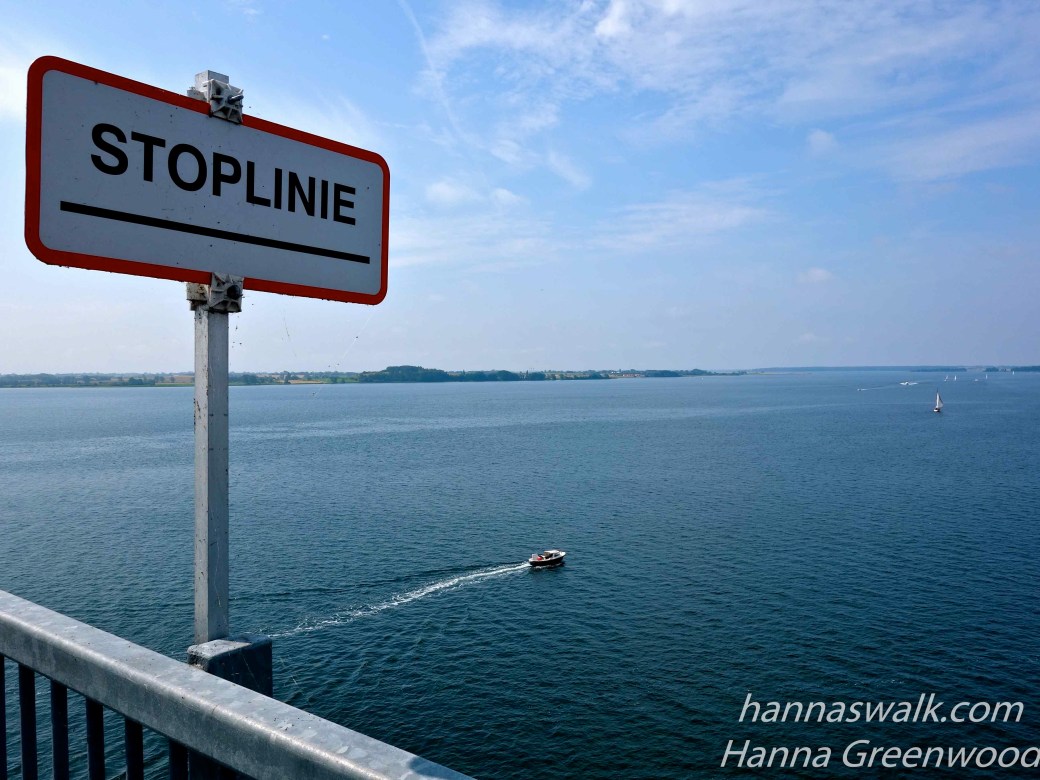
Waiting on Dronning Alexandrines Bro for a new adventures day to begin.

Dronning Alexandrines Bro - Moen Broen

A walk among Mesolithic Ancestors

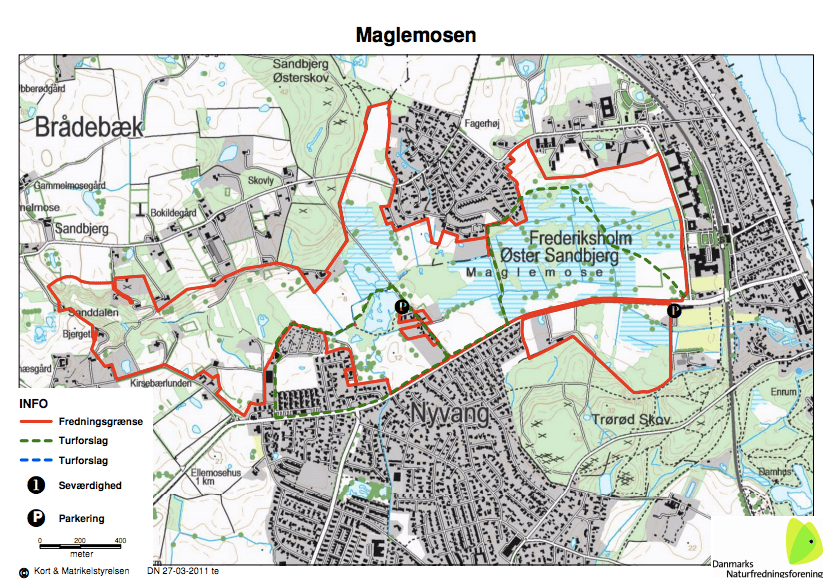
Yesterday I drove to Vedbaek Havn and took great pleasure in the environment before I went for a walk in Maglemosen, a bog with a very interesting history.
A walk I strongly recommend.

For 7,000 years ago, the water level was 5 meters higher in Vedbæk fjord than it is today. Since then the country has risen, and the sea receded.
The average temperature was 2-3 degrees higher than today, and Denmark covered with virgin forest.
Archaeologists estimate that people lived a good life around the fjord. They hunted wild boar, red deer, wild cats, squirrels and deer with bow and arrow. The biggest bow ever found is 195 cm high.
There are thick settlement strata that bear witness to a continuous settlement 5500 – 4500 BC

People back then had a high culture. Bear teeth suggest trading in Skåne. The graves sprinkled with ochre. An infant is laid on a swan’s wing next to his mother, who has rested on a soft leather with sewn-bear teeth. People buried on deer antlers. Waste reveals which animals and plants that were in the area and what kind of fishing gear and weapons the hunters used.

I went to Maglemosen last year in early spring you can see the pictures from the beautiful walk: På vandring i Maglemosen i Vedbæk.

Skærmbillede 2016-07-22 kl. 12.11.18

I kan læse meget mere i Dansk Naturfredningsforenings spændende folder.

Finally Summer Came To Denmark

A Bleak Summer

A walk in Rude Skov among raspberry and beetles.
‘There is a crack in everything.
That’s how the light gets in.’¹
– even through the dark clouds.

____________________________

¹. Leonard Cohen, Selected Poems, 1956-1968