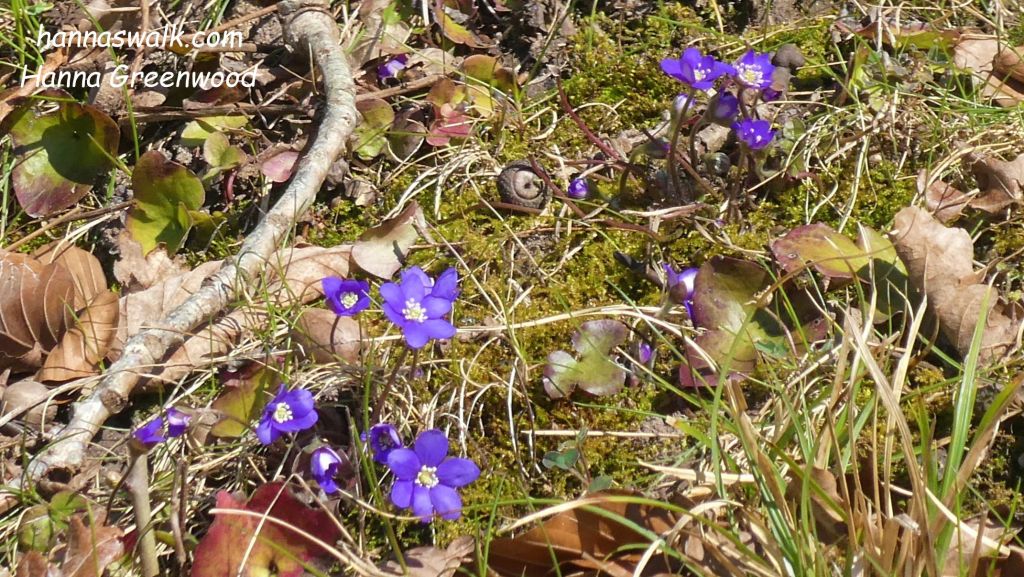
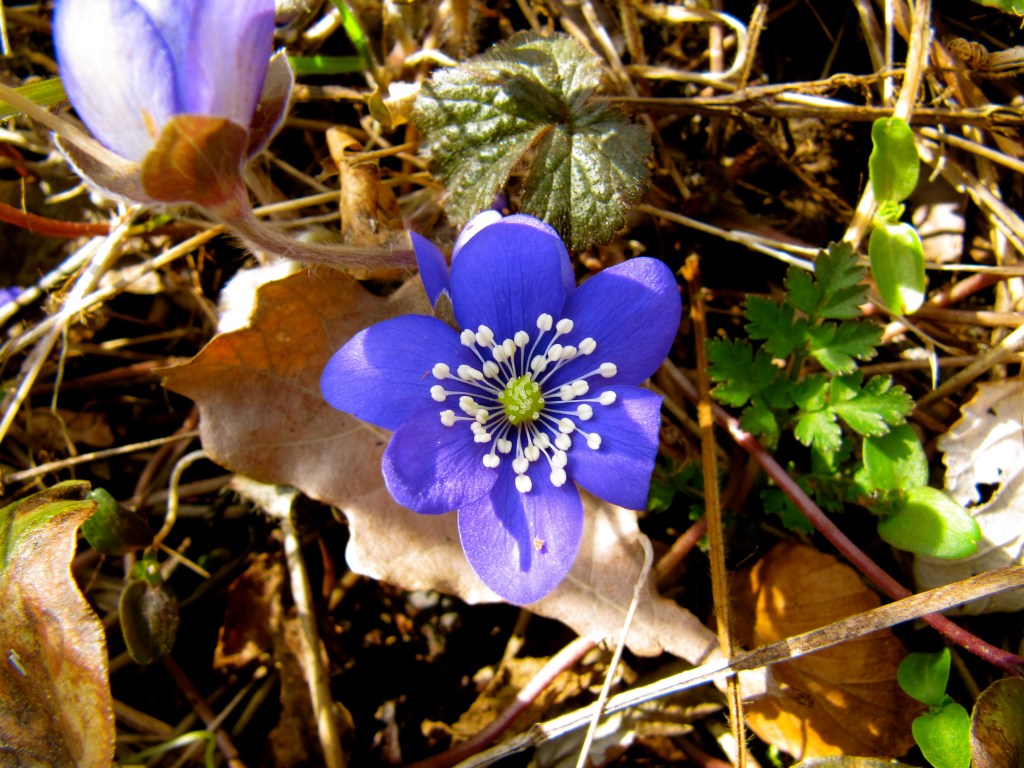
Spring is here, and with it comes one of nature’s most enchanting treasures: Blue Anemone, Hepatica.
On my latest walks, I’ve been keeping a close eye on the sunny slopes of our ancient forests, waiting for that unmistakable burst of deep violet-blue.
Finding one feels like discovering a tiny piece of fallen sky tucked away in the undergrowth.
Did you know that Blue Anemone has a secret partnership with ants? 🐜✨
The Blue Anemone produces many small green fruits, which are surrounded by three bracts. Each small fruit has a small appendage containing oil. Ants are fond of this oil; they collect the fruits and carry them away, which helps to disperse the plant.
As for where I found these blue beauties? That’s a secret I’ll keep to the forest floor. The Blue Anemone is like the forest’s own little crown jewel, and when it is so rare that it has its own ‘bodyguard team’ of barriers, you know you have found something truly special. Some treasures are best appreciated from afar, allowing you to look forward to the magic of next spring ❤️
NOTE
Fascinating Name and History of the Blue Anemone; Hepatica: The name “Hepatica” comes from the Greek word for liver, as the leaves were traditionally thought to resemble the organ, which led to its historic (but false) use in treating liver ailments based on the “Doctrine of Signatures”
Description
Blue Anemone is a perennial herb that grows to a height of 5–15 cm.
Flowers
The plant flowers in March and April. The flower consists of 6–7 petals, which are initially deep blue-violet but later fade to a lighter blue. In the centre of the flower are green stigmas surrounded by a ring of white stamens. The flower stalks are reddish and covered in long, silky hairs.
Leaves
The leaves are trifoliate and bear no resemblance to those of the wood anemone. They are green on the upper surface and reddish on the underside. The leaves may remain green throughout the winter.
Fruits
The Blue Anemone produces many small green fruits, which are surrounded by three bracts. Each small fruit has a small appendage containing oil. Ants are fond of this oil; they collect the fruits and carry them away, which helps to disperse the plant.
Rhizome
The Blue Anemone has a vertical rhizome.
The flower is occasionally found on slopes in old deciduous forests and scrubland. It prefers nutrient-rich soil with a high content of lime and clay. It is common on Lolland Falster, Mon, South Zealand and Bornholm, rare in West Jutland and sporadic elsewhere. It’s often eradicated from woods near major towns as it is dug up and taken home to gardens.










You must be logged in to post a comment.