I’ve spent magical times on my walks at Frederiksborg Castle north of Copenhagen. Winter evenings were beautiful. The Stable Street and portals, gate towers and turrets, the courtyards and of course the view of Frederiksborg Castle, covered with snow all together added the impression of a fairy tale.
These delights are surrounded by wonderful castle gardens.
My plan was to revisit the renaissance castle, the baroque garden and not least the ordinary and spectacular garden with ponds and old trees. Bathhouse, hunting castle and the grazing Dexter cows. Well you might not call it ordinary after all.
Oh! What were the ducks waiting for?
They are waiting for their feathers to grow out properly so they can fly over the castle and enjoy the beautiful sight of all the glory. They will also take the opportunity to forage.
There are moments in my life that has established themselves as Oscar-winning films. Oscars for best scenario and best plots.
There is the story of Beowulf who hears about friends who are in need in Denmark. He comes to help and defeats monsters, goblins and dragons.
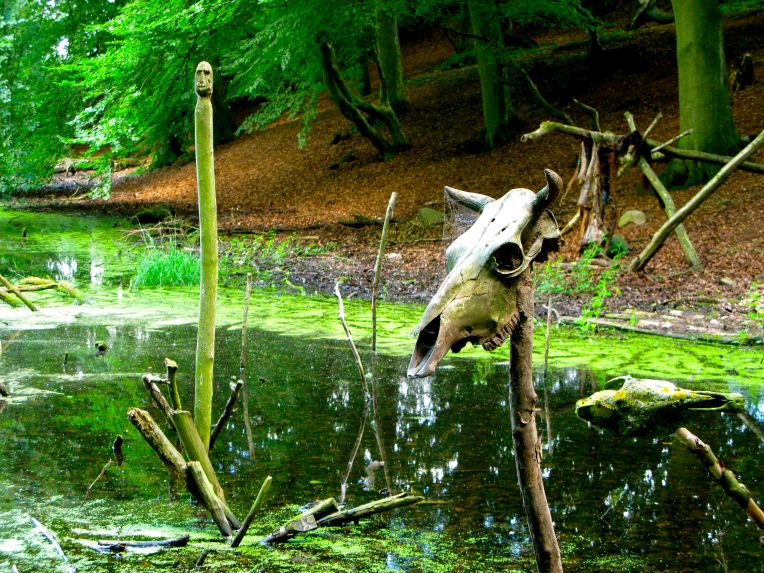
There are stories of bog holes so creepy that deer choose the death by biting dogs, rather than the flight into the bog.
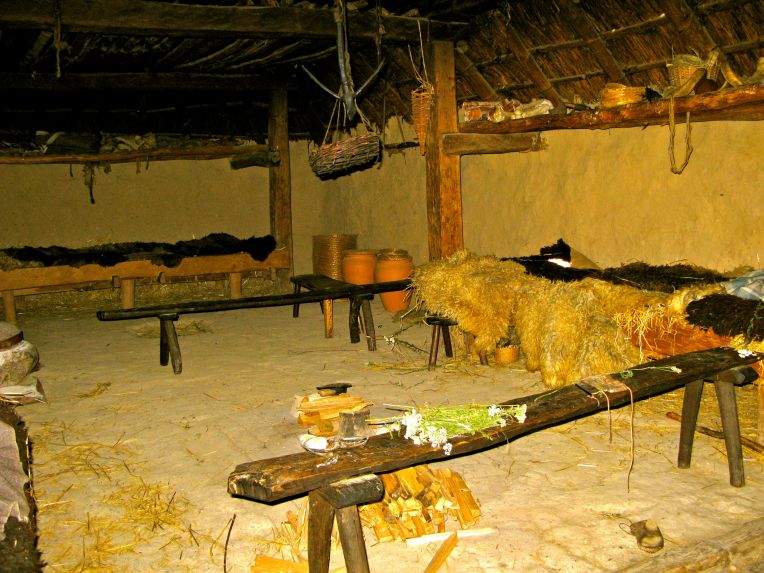
There is a story about a mighty meat hall in Lejre where King Roar generously shares his possessions between the men who honour him while quoting verses and letting themselves entertain by women.
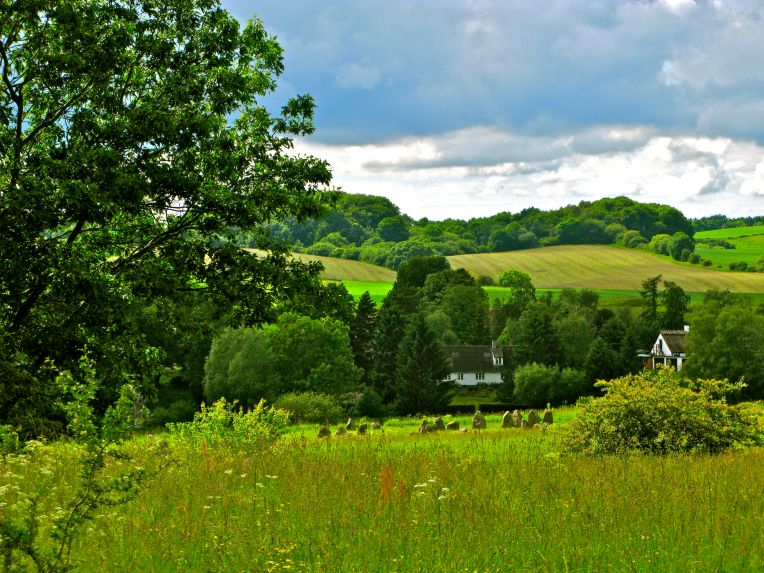
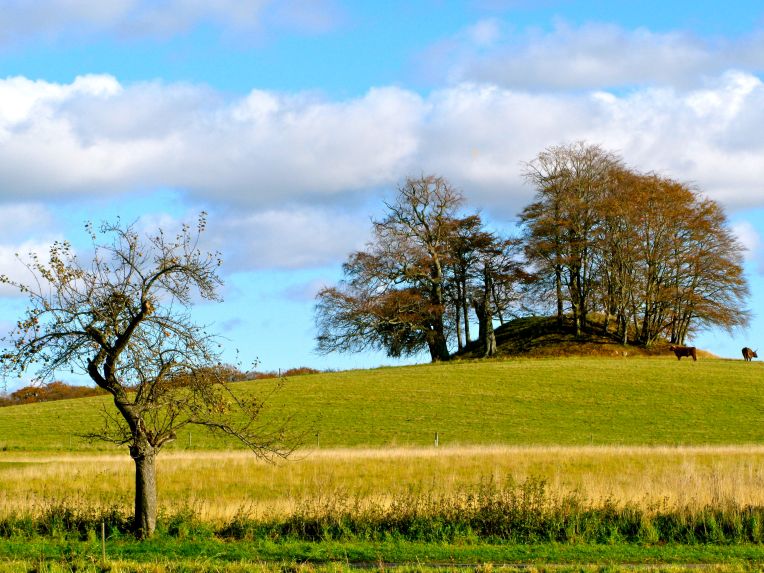
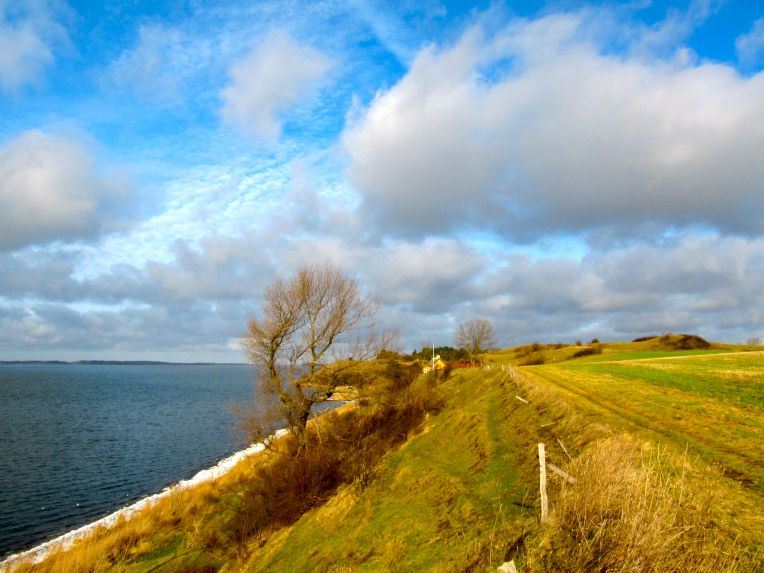
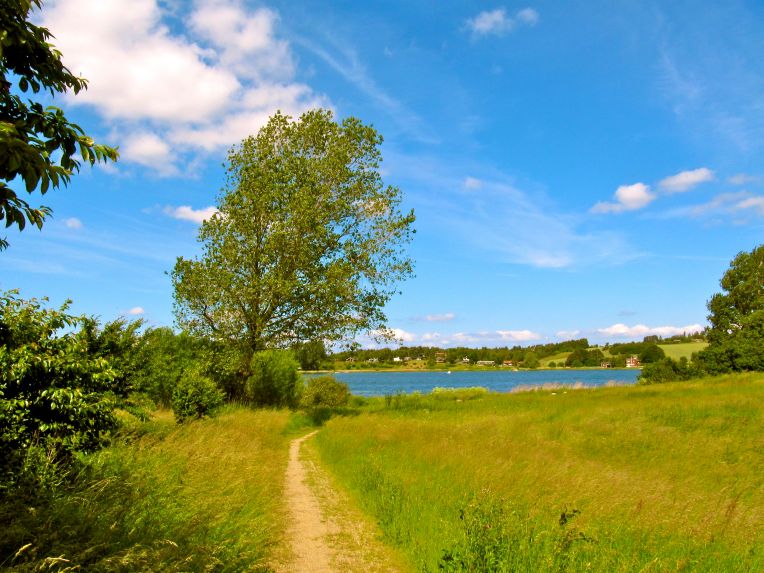
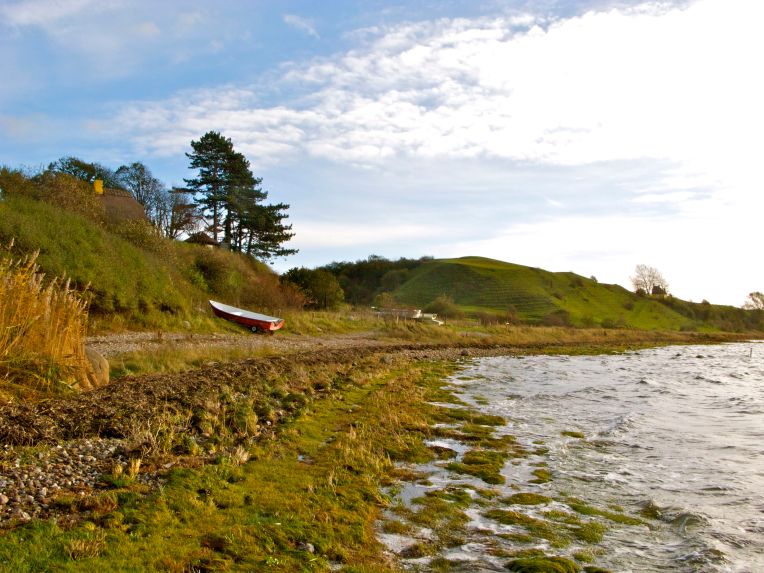
Some of the best scenarios are from the fjord country; Landscapes with undulating wheat fields, where narrow picturesque roads winding between mounds and small village churches. Flashing fjords and lakes, promontories and inlets, hills and beautiful forests.
Does that sound like a fairy tale? It’s true because when I walk in the fjord country on a beautiful summer day, the adventure feels for real.
I have walk and cycled on countless trails in the fjord country.
Now I have found some new information’s, which many of you probably are familiar with.
The new data adds a new dimension to the landscape I know so well.
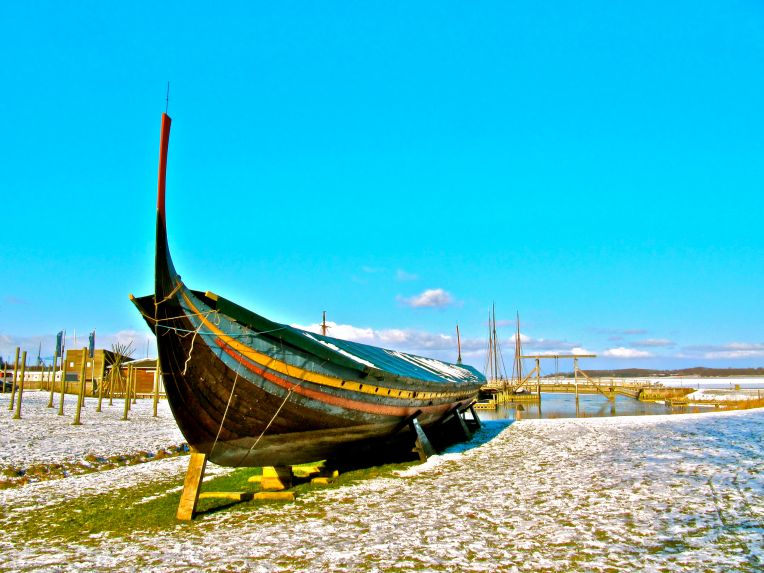
It was during a cross-search of Danish Vikings and Iceland, that I came across the Beowulf Poem.
The story of Beowulf is a unique plot written by English monks in the 8th century. A heroic poem. The poem begins with a celebration of Danish kings and King Skjold and his family.
It is the hero Beowulf who tells of King Skjold that he as a little child came to the royal solve Denmark, sailing alone on a ship.
The Danes saw a ship steer towards the shore; it had no oars outside, and there were no men to see at deck. As the ship slid in and lay down on the shore, people found a small boy lying alone on the deck. His head rested on a sheaf, and around him weapons were stacked.
The Danes carried the boy ashore, brought him to town; and proclaimed him as a king on a sacred stone, King Skjold.
Beowulf belonged to the Goths in Sweden, but he also had close ties to the Danish court, where he had stayed for a while when he was a child. When he learned that the ageing King Roar was in deep distress, he gathered a dozen of the best fighters and came to Roar’s rescue.
_________
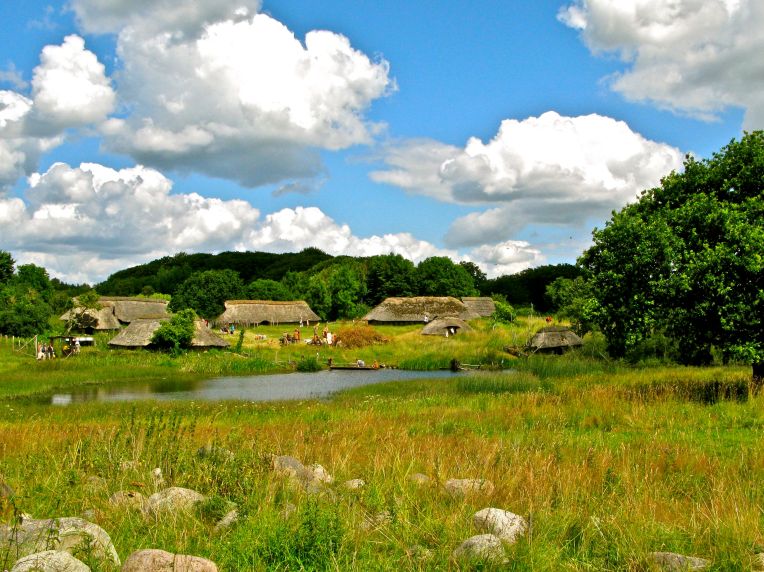
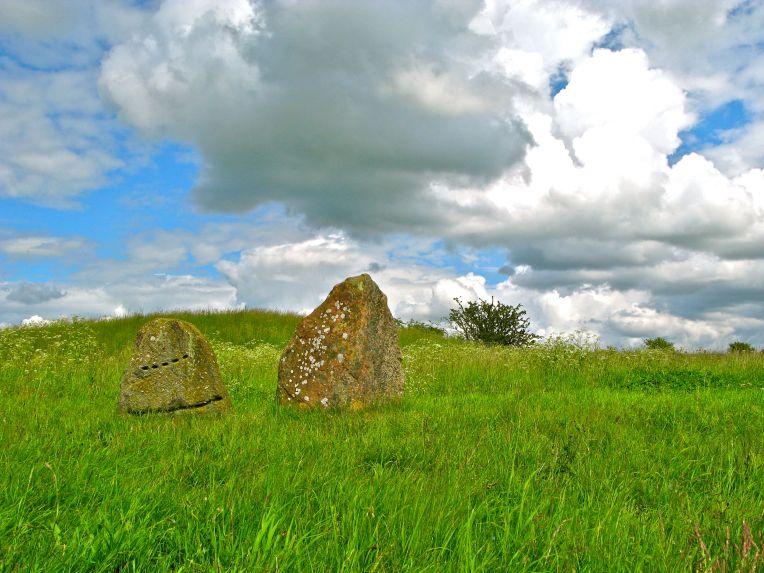
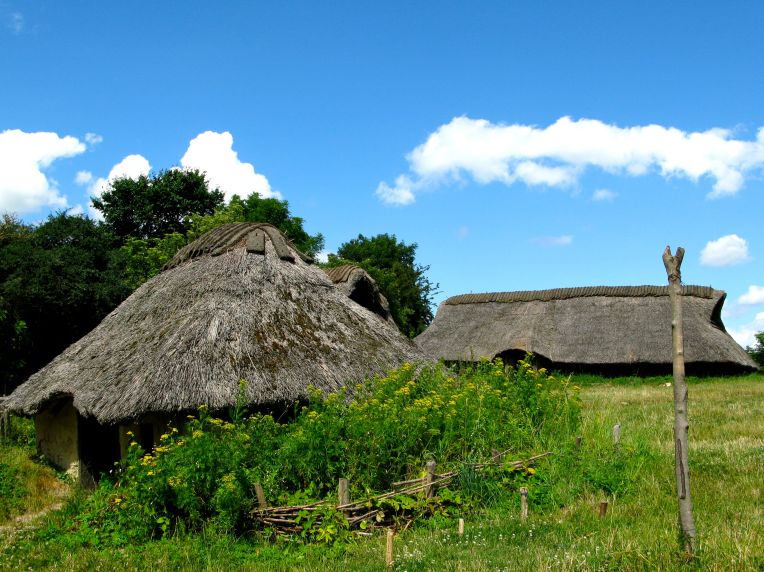
A few year back archaeologists uncovered post holes after a mighty meat hall uncovered from 500 years A.D. in Lejre. The hall is from the same period as the legend of the royal family Skoldungerne with Roar, Helge and Rolf Krake and the famous ‘Hjorthal’ or known in England as Heorot. There are plans for a reconstruction of Heorot in Lejre.
You can read much more about these important finds in the notes.
On an artificial island outside Dragør town is Dragør Fort, as part of Copenhagen’s Fortifications from the years around the 1880 to 1920.
Last time I was here, the sun shone and the sea glittered at every little ripple. The yellow houses with red tiled roofs stood in a wonderful contrast against the blue sky on this glorious summer day.
I was so interested in the many sights in the harbor, and had no time to take a closer look at Dragør Fort. But today it’s different, today the fort is my goal.
It’s bitterly cold, with a fresh breeze from the south, but the view is unique here on the top of Dragør Fort. Øresund Bridge is looming sharp against the blue sky and a large container ship looks as if it will topple down into the gap behind the horizon line.
Turning my back at the sea I have the opportunity to admire Dragør town 400 meters away on the mainland, and the houses lights up the landscape with the beautiful yellow masons and red tile roofs.
“Most of the fortifications were built between 1885 and 1894 in response to Denmark’s crushing defeat to Germany in 1864. During the first World War fortifications were manned by almost 50,000 soldiers. But when the war was over, the technological developments had outpaced the fortifications and the great defense ring was abolished as defense. “1. befaestningen.dk
Did you became curious about The Fortifications of Copenhagen? If so you will be able to read more about on this site: vestvolden.info
På en kunstig ø uden for Dragør by ligger Dragør Fortet, som en del af Københavns befæstning fra årene omkring 1880 til 1920.
Sidste gang jeg var her skinnede solen, og havet blinkede ved hver en lille krusning. De gule huse med de røde tegltage stod i en vidunderlig kontrast mod den azurblå himmel på den dejlige sommerdag. Jeg var optaget af de mange synsindtryk i havnen, og havde ikke tid til Dragør Fortet, men i dag er det anderledes, i dag er fortet mit mål.
Det er bidende koldt, med en frisk kuling fra syd, men udsigten er enestående her oppe på toppen af Dragør Fortet. Øresundsbroen aftegner sig skarpt mod den blå himmel, og store containerskibe ser ud, som om de vil vælte ned i gabet bag horisontlinjen. Vender jeg ryggen til havet ligger Dragør by 400 meter inde på fastlandet, og lyser i landskabet med med de smukke gule og røde farver.
“Hovedparten af Befæstningen blev opført mellem 1885 og 1894, som reaktion på Danmarks sviende nederlag til Tyskland i 1864. Under 1. Verdenskrig var Befæstningen bemandet med næsten 50.000 soldater. Men da krigen var slut, havde den teknologiske udvikling overhalet Befæstningen, og den store forsvarsring blev nedlagt som forsvarsværk.” 1. befaestningen.dk
Some years ago, I took the train every morning from Hillerød towards Hundested to work.
At Christmas, I could see a Christmas tree brightened up the harbor area from my window. It was lashed to a crane in the harbor. An evocative sight.
The harbor is the focal point of the town. In summer, the town is filled with travelers, but I like it best in winter. Nature becomes more present due to sea storms and the changing light from the sea. Maybe I’m biased by my penchant for ships and water, but the harbor is a very exciting place.
If the weather was fine finishing work hours, I walked up past Knud Rasmussen’s house and further along the coast down to Kikhavn. From here I went along small country roads to the nearest train station. Always late supper 🙂
In the year 2013 Hundested was selected as the best port in Denmark because of the many wonderful activities.
Knud Rasmussen planned his next polar expedition from his study with a tantalizing view over the sea.
Her sad Knud Rasmussen, og planlagde de næste ekspeditioner til polarområdet med udsigt til Kattegat fra arbejdsværelset.
I nogle år tog jeg toget hver morgen fra Hillerød mod Hundested for at arbejde.
Ved juletid kunne jeg se et juletræ lyse smukt ud over havneområdet fra mit vindue. Det var surret fast på kranen nede i havnen. Et stemningsfuldt syn. Havnen er omdrejningspunktet i byen.
Om sommeren er byen fyldt med feriegæster, men om vinteren er byen bedst. Naturen bliver mere nærværende i kraft af havets storme, og det skiftende lys. Måske er jeg forudindtaget med min hang til skibe og vand, men havnen er til stadighed et spændende sted, også om vinteren.
Hvis vejret var fint, når jeg skulle hjem fra arbejde, gik jeg op forbi Knud Rasmussens hus og videre langs kysten ned til Kikhavn. Herfra gik jeg ad små landeveje til den nærmeste togstation. Altid sen aftensmad 🙂
I året 2013 blev Hundested Havn valgt som bedste havn i Danmark på grund af de mange dejlige aktiviteter.
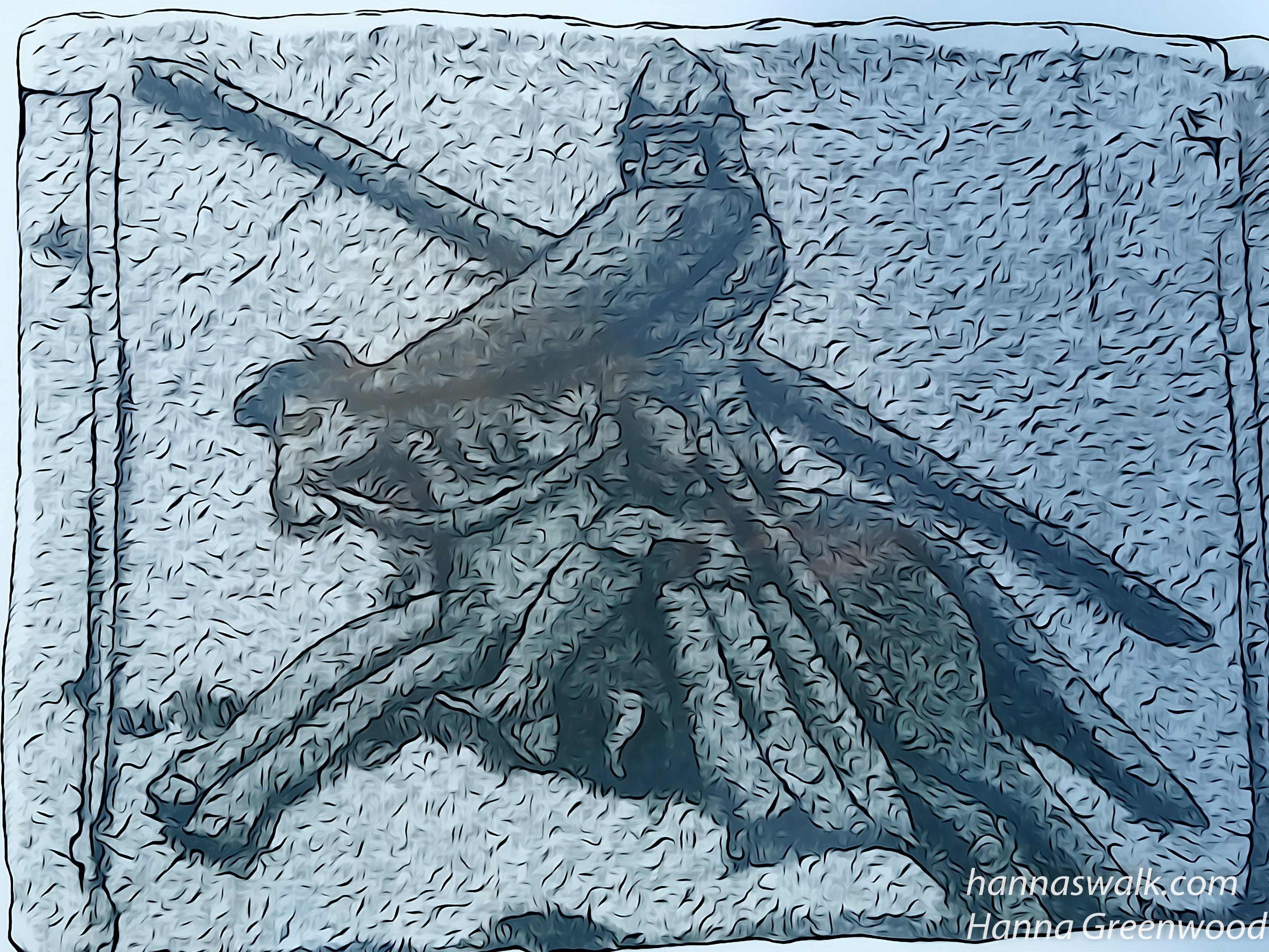
Ridder til hest, Billede på granitkvader fra begyndelsen af 1100 – tallet
Vi har været oppe på Bastruptårnet, og fantaseret over historien mens vi nød synet af Bastrup Sø og skovene. Bagefter gik vi over til Klevad Mose, der altid er et besøg værd.
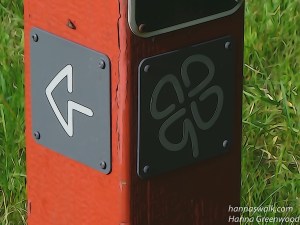
På turen bemærkede jeg et Kløver tegn. I kender måske betydningen, hvis ikke, kan I læse om projektet længere nede i indlægget.
Klik i billedet af Kløversti mærket, og I kan få inspiration til en vandretur ved Bastruptårn via Endomondo. Kløverstier er et projekt der skal forene befolkningens muligheder for kultur-, frilufts- og naturoplevelser med motion og bevægelse.¹
Friluftsrådet, Danmarks Idræts-forbund, Danske Gymnastik- og Idrætsforeninger samt Danmarks Firmaidrætsforbund har samarbejdet om etablering af nye afmærkede stiruter i danske byer.
“Eksempler på skiltning:
Kløverstierne bliver afmærket med kløverskilte i fire farver alt afhængig af rute og længde. Ruten på 2½ km bliver grøn, 5 km blå, 7½ km rød og 10 km sort.
Ved Kløverstiernes udgangspunkt opsættes en større startpæl eller pylon.
We went from Islands Brygge to Refshaleøen. A fun and interesting walk. Fun because of the colorful life along the canal, and interesting because we went through districts that exude interesting ship- and industrial history.
On Refshaleøen it is the history of the shipyard Burmeister & Wain that occupies our thoughts. Denmark’s largest shipyard and leading diesel engine manufacturer until 1996.
Langs Takkeloftsgraven. Bygninger fra 1767, Hovedmagasin for skibenes takkelage (bomme, vanter, fald, skøder mm.)
Christianshavn
Refshaleøen
Refshaleøen
Christianshavn
Refshaleøen
Vi gik fra Islands Brygge til Refshaleøen. En sjov og interessant gåtur. Sjov på grund af det farverige liv langs kanalen, og interessant, fordi vi gik gennem kvarterer, der rummer interessant skibs- og industrihistorie.
På Refshaleøen er det historien om skibsværftet Burmeister & Wain, som optager vores tanker. Danmark største skibsværft og førende dieselmotor producent indtil 1996.
På den tur blev jeg opmærksom på den historie, der knytter sig til Vedbæk Sydstrand og ejendommen, Miramare.
Dronning Caroline Mathilde har boet på stedet, men der har endvidere været militær base og toldsted. I 1811 blev der bygget en skibsbro til toldstedet.
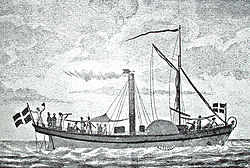
Da Danmarks første dampskib Caledonia begyndte at sejle fra København til Bellevue og videre op til Vedbæk i 1819, blev skibsbroen betragtet som en oplagt mulighed for at modtage landliggerne.
Med sine store skovhjul kunne dampskibet dog ikke lægge til ved broen. Det gav fiskerne en ekstra indtægt, når de sejlede og bar gæsterne ind på land, som skildret på C.W. Eckersbergs skitse.
På Bellevue Strand blev der ligeledes bygget en anløbsbro i 1819, den blev revet ned i 1970.
Caledonia blev bygget i 1815 i Port-Glasgow af James og Charles Wood. Prøv at se de historiske billeder fra Glasgow på dette link: Sailing down the Clyde
Vedbæk Sydstrand
Miramare, Vedbæk Sydstrand
Vedbæk
Vedbæk Havn
Miramare, Vedbæk Sydstrand
Bellevue Strandbad,
Skitse af C.W. Eckersberg
Øresund
Interaktivt rutekort over Rudersdal Ruten
Her finder I Enrum Dam, som jeg kom forbi, da jeg fulgte Kikhanerenden på min vej ud til Vedbæk og Øresund.
Enrum Dam er smukt beliggende, og et meget stemningsfuldt sted.
God tur og husk regntøj 🙂
__________________________________
Christoffer Wilhelm Eckersberg døde under Koleraepedimien i København og ligger begravet på Assistens Kirkegård i København i 1853, og ikke ude i Jægersborg Dyrehave! Se mit indlæg om koleraepedimien her: The Death and The Hawthorn








 HANNA'S WALK
You must be logged in to post a comment.