September Walking

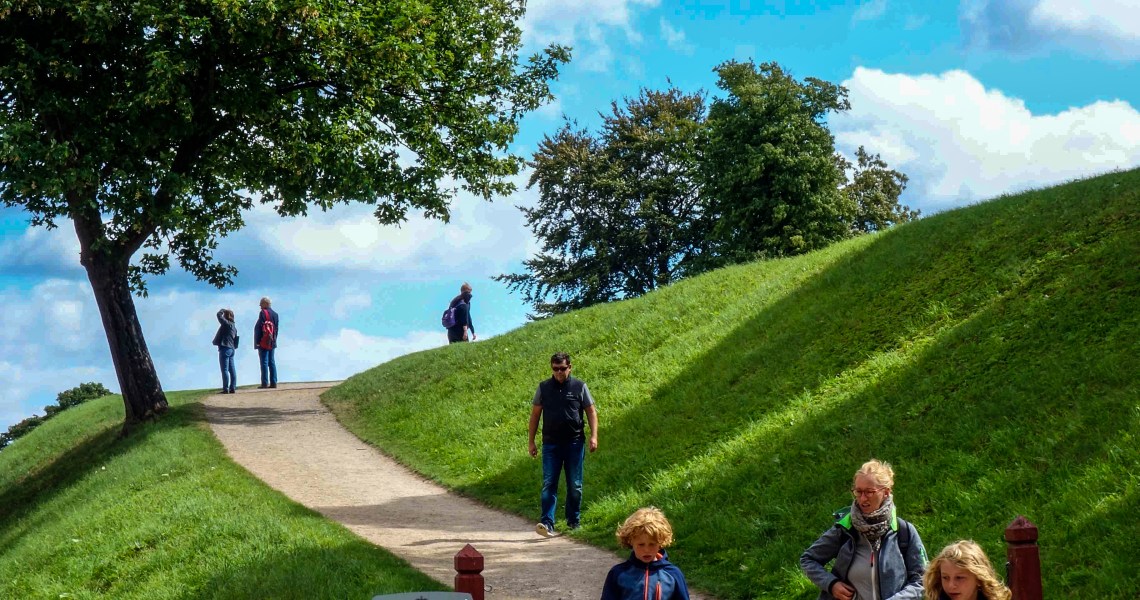
Høje Møn is outstanding nature in Denmark.
We drove south from Copenhagen and as we approached Møn the haze was like a light veil over the peninsula.
It was a stunning walk with exceptional views.
You can find this area on: Danskebjerge

Notes
Geocenter Møn
danskebjerge.dk

Spirit and Environment

When I walk through the small streets in Taarbæk I cannot help noticing several birds decorated on the gables by the artist Jørn Mathiassen.
That adds harmony and good ambience to the walk as though you are welcomed by the town itself.

Taarbæk was founded as a fishing village in the 1600s, and the fish sold in Copenhagen. Today there is a small marina. The atmosphere is lovely in the town’s quaint streets and the harbour is cozy with a little restaurant.

Notes

Kunsteren Jørn Mathiassen, stod bl.a. bag scenografien til børneklassikeren ‘Jullerup Færgeby’

Taarbæk

Taarbæk Portalen

If You Have Ever Gone To The Woods With Me…

How I Go to the Woods, by Mary Oliver

Ordinarily I go to the woods alone, with not a single friend, for they
are all smilers and talkers and therefore unsuitable.

I don’t really want to be witnessed talking to the catbirds or hugging
the old black oak tree. I have my way of praying, as you no doubt have yours.

Besides, when I am alone I can become invisible. I can sit on the top of
a dune as motionless as an uprise of weeds, until the foxes run by unconcerned. I can hear the almost unhearable sound of the roses
singing.

If you have ever gone to the woods with me, I must love you very much.

This morning I watched the deer
with beautiful lips touching the tips
of the cranberries, setting their hooves down
in the dampness carelessly, isn’t it after all 
the carpet of their house, their home, whose roof
is the sky?
Why, then, was I suddenly miserable?
Well, this is nothing much.
This is the heaviness of the body watching the swallows
gliding just under that roof.
This is the wish that the deer would not lift their heads
and leap away, leaving me there alone.
This is the wish to touch their faces, their brown wrists –
to sing some sparking poem into
the folds of their ears.

then walk with them,
over the hills
and over the hills
and into the impossible trees.

This Morning I Watched the Deer, by Mary Oliver

Resting among Flowers and Broken Bedrock

I took a rest between flowers and broken bedrock, which form part of a coastal protection along Øresund.
Just before I took off, I saw a drawing on one of the stones. A pattern I’ve never noticed before, even though I have walked many kilometres on bedrock.
My curiosity made me contact a researcher in geology.
Quickly I got a very nice response.
The drawing on the stone is a Ptygmatic Fold.
Watch this linked send to me over variations of foldings.
Our Earth is amazing and so are the help we can get from nice researchers.
Thank you!

There is an art to wandering

Sometimes I have a heartfelt joy to wander aimlessly.
I didn’t plan this walk. A walk among hawthorns and deers towards the coast of Øresund.
All my worries are left  and the only thing that counts is the present moment.
Our brain needs a break so our spirit can live.

There is an art to wandering. If I have a destination, a plan – an objective – I’ve lost the ability to find serendipity. I’ve become too focused, too single-minded. I am on a quest, not a ramble. I search for the Holy Grail of particularity, and miss the chalice freely offered, filled full to overflowing.
by  Cathy Johnson, On Becoming Lost

Where do you get inspiration for your walks?

Where do you get your inspiration when you are going for a walk?
I found myself without any idea the other day. I had one glorious one in mind but it was far to late for train and ferry.
By a process of elimination, I chose the train towards Copenhagen and soon I found myself on Kalvebod Fælled on Vestamager, a place I have visit before.
But this time I decided I wasn’t going to walk these endless paths.
From the last time I knew there would be bikes for rent. Though I didn’t know how good the bikes were.
Now I’ve tried one and it was really great. I had an extraordinary ride with twinkling lights a blinking sea and wide open spaces where horses were grazing and birds foraging.
A group of children were swimming, and people went surfing further down the beach. A sailboat had crashed under one of the recent storms. A guy checked with the police who already knew about the ship.
I was so happy for the sun and the long bike ride that I forgot about the deadline for submission of the bike. It became a bit of rush at the end.
It is highly recommended. Not the rush but the bike ride!

Notes

You can download a map and read more about this stunning area; Kalvebod Fælled

Rent a bike: Friluftshuset

An Entertaining Stroll In The Citadel

I’m standing on top of the Citadel’s ramparts looking over the harbour while swallows fly closely by. I am sure the birds benefit from the steep ramparts one way or another.

Particularly two traditions link the Citadel to the public holiday, Stor Bededag and the night before.

Best known is the custom of eating warm wheat buns on Stor Bededags evening. The reason is that not even the bakers were supposed to work from sundown the night before Stor Bededag and throughout the following day.
Therefore very large wheat buns were baked the day before which people could take home to heat and eat the next day.

However, the wheat buns were eaten the same night – while they were still warm and crisp.
Today it is possible to buy the wheat buns all over when Stor Bededag is approaching.

The second tradition normally associated with Stor Bededag, was the habit of Copenhagen’s bourgeoisie walking on the ramparts on the evening of Stor Bededag. The custom can be traced back to the 1700s and is said to be caused by the melodious chimes of Our Lady Church’s carillon, which lured people of Copenhagen out on a stroll to enjoy the newly sprouted, spring green linden and chestnut trees.

The carillon was set up in 1747 and destroyed by the British bombardment in 1807 the church’s spire was hit and crashed into the main building, which burned completely.

It seems that the tradition once again is popular among people from Copenhagen and every day might work

Notes
Useful information on this site: Copenhagenet.dk
Kastellet
Kastellet, Copenhagen, Wikipedia

The Mythological Gefion

The Gefion Fountain never stops to fascinate me. I came here as a child with my mother. Now I’m back as an adult being a tourist in my home town.

Gefion

Notes

The fountain depicts the mythical story of the creation of the island of Zealand on which Copenhagen is located. The legend appears in Ragnarsdrápa, a 9th-century Skaldic poem recorded in the 13th century Prose Edda, and in Ynglinga saga as recorded in Snorri Sturluson’s 13th century Heimskringla.

According to Ynglinga saga, the Swedish king Gylfi promised Gefjun the territory she could plow in a night. She turned her four sons into oxen, and the territory they plowed out of the earth was then thrown into the Danish sea between Scania and the island of Fyn. The hole became a lake called Lögrinn and Leginum (locative). Snorri identifies the lake Löginn, as the lake of Old Sigtuna west of Stockholm, i.e., Lake Mälaren, an identification that he returns to later in the Saga of Olaf the Holy. The same identification of Löginn/Leginum as Mälaren appears in Ásmundar saga kappabana, where it is the lake by Agnafit (modern Stockholm), and also in Knýtlinga saga.

In spite of Snorri’s identification, tourist information about the fountain identifies the resultant lake as Vänern[1] ,[2][3][4] Sweden’s largest lake, citing the fact that modern maps show that Zealand and the lake resemble each other in size and shape.

Snorri, however, was well acquainted with Vänern as he had visited Västergötland in 1219. When he referred to this lake he called it Vænir[5] Wikipedia

A walk among Mesolithic Ancestors

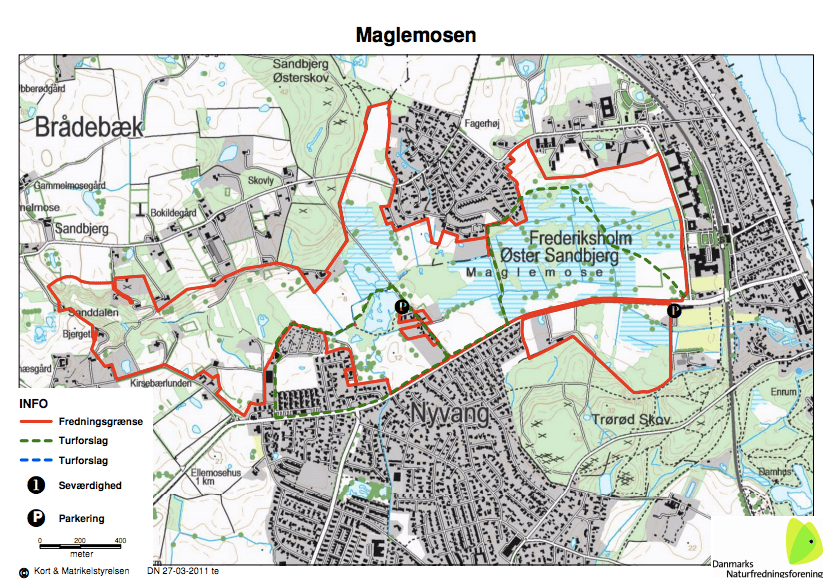
Yesterday I drove to Vedbaek Havn and took great pleasure in the environment before I went for a walk in Maglemosen, a bog with a very interesting history.
A walk I strongly recommend.

For 7,000 years ago, the water level was 5 meters higher in Vedbæk fjord than it is today. Since then the country has risen, and the sea receded.
The average temperature was 2-3 degrees higher than today, and Denmark covered with virgin forest.
Archaeologists estimate that people lived a good life around the fjord. They hunted wild boar, red deer, wild cats, squirrels and deer with bow and arrow. The biggest bow ever found is 195 cm high.
There are thick settlement strata that bear witness to a continuous settlement 5500 – 4500 BC

People back then had a high culture. Bear teeth suggest trading in Skåne. The graves sprinkled with ochre. An infant is laid on a swan’s wing next to his mother, who has rested on a soft leather with sewn-bear teeth. People buried on deer antlers. Waste reveals which animals and plants that were in the area and what kind of fishing gear and weapons the hunters used.

I went to Maglemosen last year in early spring you can see the pictures from the beautiful walk: På vandring i Maglemosen i Vedbæk.

Skærmbillede 2016-07-22 kl. 12.11.18

I kan læse meget mere i Dansk Naturfredningsforenings spændende folder.

Finally Summer Came To Denmark