Journalist, author and editor Eivind Eidslott has written this lovely piece of poetry: Når Sola Snur.
When the Sun Turns, is inspired by the Norwegian Mountain Rules and winter solstice. Translation from Norwegian to English by me:
There is no shame in turning around Turn around in time We all want to return home
That is why we turn in gale, in snow fog, in doubt. We turn in storm, in hail showers, in fog.
We turn in good weather, in stormy weather, in all kinds of weather. We turn around before dark, and hunger and cold. We go back before the body is empty, before the feet are worn out, before the mood runs out. We all want to return home
But turn now, Turn your head and see: Now the sun is turning, ouch! There is no shame in that. It’s got a new position of trust up there. The biggest task, The winter solstice. When the Sun Turns by Eivind Eidslott
Yesterday was the shortest day of the year and the sun was shining. The light of Winter Solstice. The sun is turning ❤️
Don’t miss these invaluable advises when planning trips in the Norwegian wilderness:
I read an article in an outdoor magazine yesterday. They recommended a walk in the western part of Norway. A very steep and dramatic part of the country I would say!
Pretty much anyone could do the walk, and if you did it in the summer months it should be okay they claimed. It was, however, an advantage to have some experience with mountain walks.
This questionable recommendation made me think of the mistakes I made when I was heading for the mountains for the first time. But I also thought about my sister’s neighbor. He had an accident a few months after my own.
Jens and Synnøve have family in Norway. They are often in Stavanger during the holidays, as they have close family ties. On these visits to Norway, Jens has spent part of the holidays with a friend where they hike in unknown terrain, bringing a tent and provisions. He is used to navigating using a map and compass. Everyone considers him to be an experienced hiker.
The friend was prevented once, and Jens missed his mountain walk. He got a few days off from the family dinners and set off alone with his gear, map, and compass. Jens wanted to hike in unmarked terrain along the Lysefjord to a self-service cabin to spend the night.
He parks the car and starts his walk. It’s late summer, and the weather is very changeable. There is a full day’s walk to the hut, and it is well past noon before he decides to eat his lunch. Here he takes his time and enjoys the moment. When the food is eaten, he studies the map and plots a compass course.
After an hour and a half, he becomes unsure of his whereabouts. The fix points don’t match the landscape he’s in.
I don’t know if it’s because he’s concentrating on the map, but suddenly he trips and falls several meters, landing on a small isolated ledge on the side of the mountain. His glasses are shattered in the fall. This implies that he can faintly sense the contours of the landscape and glimpse some water below him. Jens finds his phone, which is luckily undamaged. He contacts the Norwegian rescue service and tells them what has happened and where he is.
He then calls the family to inform them. Now he can only wait. It has started to rain a little and visibility is reduced. About half an hour has passed when he hears a helicopter. It gets closer and then disappears. He can hear it far away, and finally, there is complete silence. He waits for a while, but nothing more happens.
Jens contacts the rescue service again. They can’t find him. He isn’t at the coordinates where he says he is.
Jens provides information about the new compass course after lunch and his problems with locating himself later. Now he waits and hopes. It won’t be long before darkness falls. He considers whether to jump into the water below him and swim to shore, but his poor eyesight prevents him from entertaining that idea.
The phone’s battery is also about to die. It feels like a very, very long time before he can hear the helicopter again. The rescuers get closer and closer, finally spotting him down on the ledge. One of the rescuers is lowered down and secures the harness, but on the way up, he almost slips out of the harness and the action starts over again.
It is an incredibly relieved Jens, who later reunites with his family in the evening. He is bruised after the fall, but hasn’t broken anything. Jens’s daughter has been on her way out into the mountains to look for her father after the phone call, but fortunately, the rest of the family has persuaded her to wait for the rescue service’s efforts, and it turned out to be a good idea. It was also a good thing Jens didn’t jump into the water. It would have killed him, he found out later.
The pictures are from the area where Jens was walking. We were on a walk in Hunnedalen once, and strolled around Lysefjorden. This is also where the tourist attraction Kjerag is located.
Jens doesn’t hike in the mountains anymore. I don’t know whether it is a promise to himself or to his family.
Experience is a good teacher, but he will send you some insanely expensive bills.
~ Minna Antrim
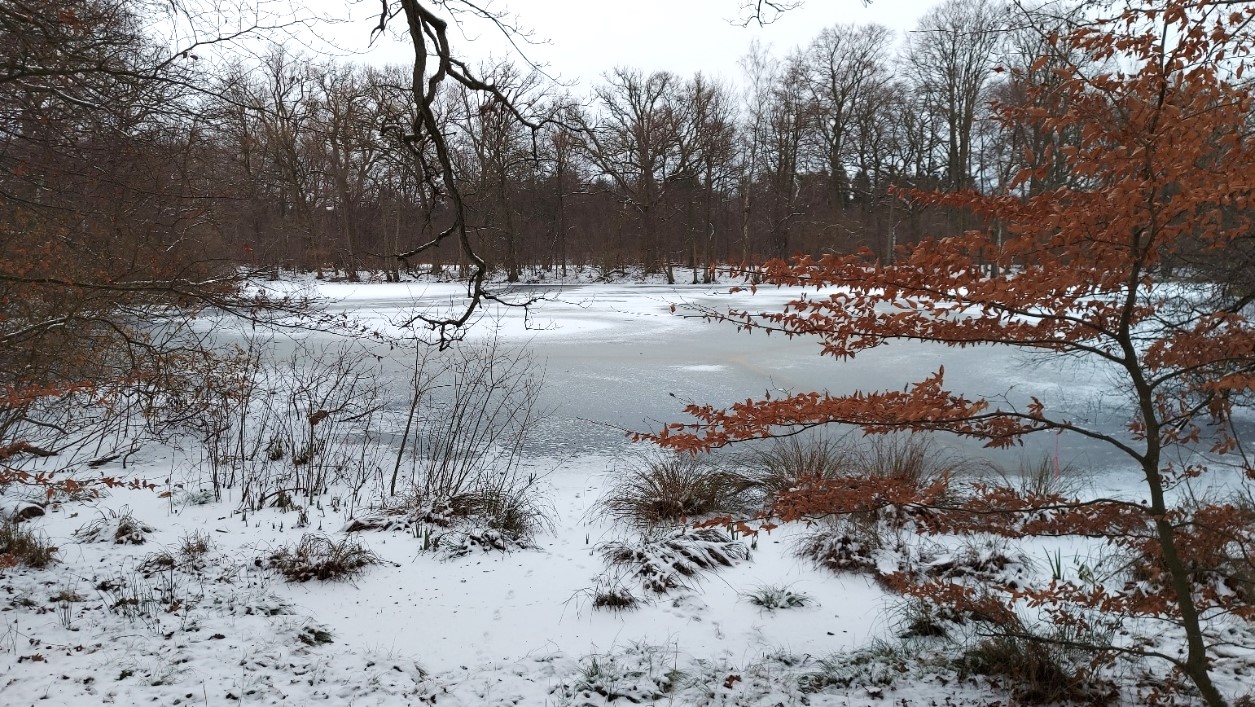
Denmark is a small country with surprisingly big differences in the weather. In the southern part of Denmark, all children were lured out into a wonderful snowy landscape. It also snowed a bit 130 km north of the winter wonderland where I live, and it was lovely while it lasted 😁 But it soon started to thaw. Maybe next time we will have better luck ☃️⛷️❤️
It is snowing right now, as it did two years ago. Maybe it will be as beautiful as in the paintings 🎄 Parts of Denmark have already received large amounts of snow now.
The Danish landscape is dark in winter, and the sun can be a rare guest. Then it’s wonderful when the snow covers fields and forests, and lights up new spaces and contours in the landscape. I love it and it makes my walk an adventure ❤️
Timber Haulers Returning Home by Frits Thaulow, 1892, oil on canvas, Bergen Kunstmuseum
Freezing river by Frits Thaulow, c. 1892, Pushkin Museum, Moscow
A Farm at Lysaker by Jacob Gløersen, 1892, Nasjonalmuseet for kunst, arkitektur og design, Oslo Norway
Christmas Party by Lars Jorde, 1895-1896, Nasjonalmuseet for kunst, arkitektur og design, Oslo Norway
Note
Now the Snow is Falling … is a reblog from 2021. Waiting for more snow to fall at this moment 😀⛷️
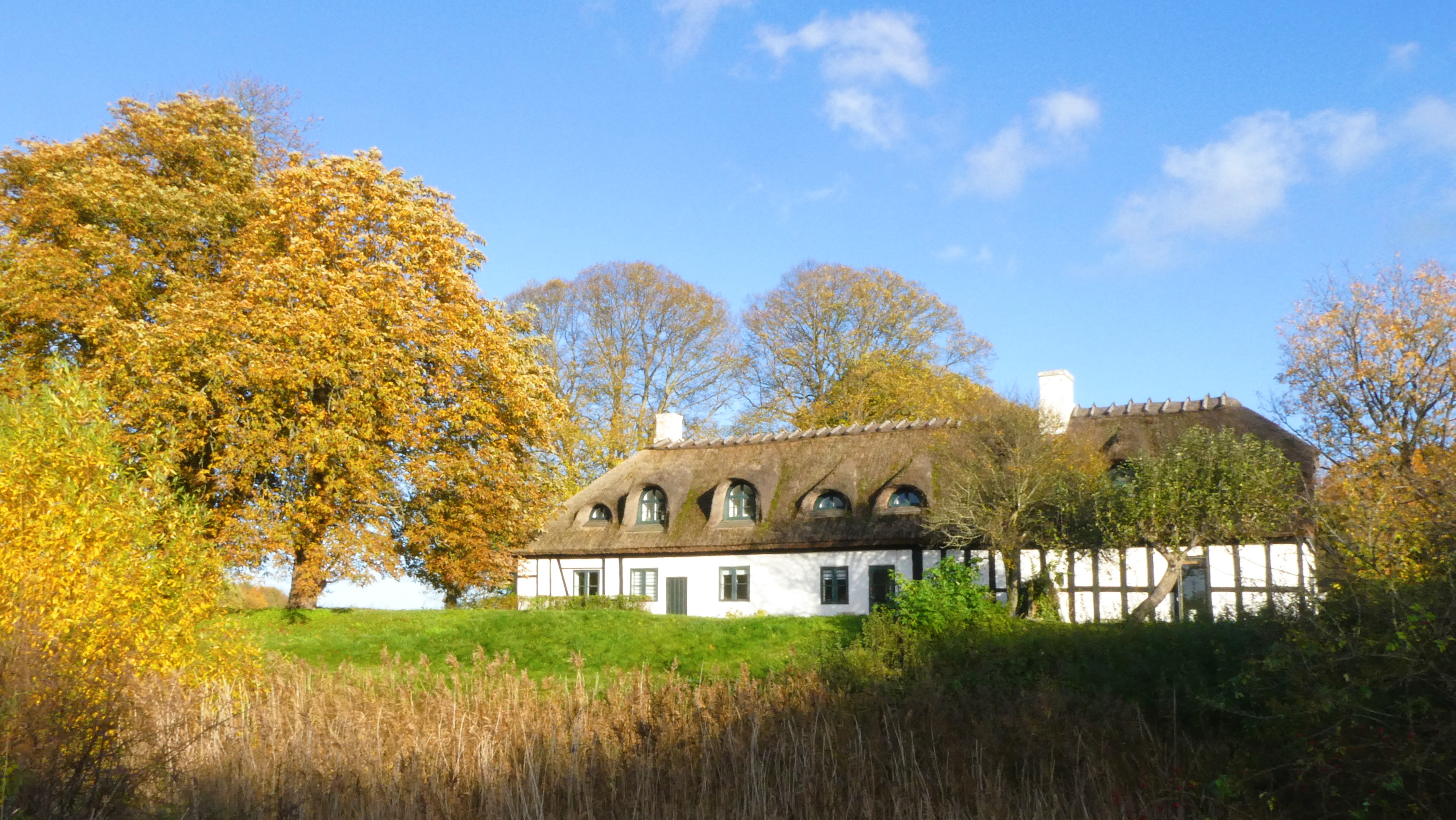
We are looking forward to this walk. Søllerød Naturpark always offers beautiful views. The walk passes the beautiful thatched farm: Rygård. To my surprise, I find that Olga, the last Grand Duchess of Russia, lived at Rygård after fleeing the Russian Revolution in 1917. There is always a story hidden somewhere. The exciting thing is finding it 😊😎
She moved to Rygård north of Copenhagen in 1930 with her husband and sons, after living in a small apartment in the Copenhagen. She enjoyed the peaceful and rural surroundings of Rygård, where she could paint and tend to her garden. She also befriended the local people and helped them with various tasks. She stayed at Rygård until 1948, when she left for Canada. Rygård is now part of the Søllerød Naturpark, a protected area of natural and cultural heritage.
Olga Alexandrovna was the youngest daughter of Emperor Alexander III of Russia and the sister of Nicholas II, the last tsar of Russia. She grew up in a tense political atmosphere, marked by several assassination attempts on her father and brother. She married Duke Peter of Oldenburg, in a loveless and unconsummated marriage. She later divorced him and married her true love, Colonel Nikolai Kulikovsky, with whom she had two sons. During the First World War, she served as a nurse and was awarded a medal for bravery. She witnessed the downfall of the Romanov dynasty in the Russian Revolution of 1917 and escaped with her family to Crimea, where they lived under constant threat of execution. Her brother and his family were brutally murdered by the Bolsheviks. She managed to flee Russia with her husband and sons in 1920 and joined her mother, the Dowager Empress, in Denmark. She moved to Canada in 1948, fearing Stalin’s regime, and died there in 1960. She was the last surviving member of the Romanov family.
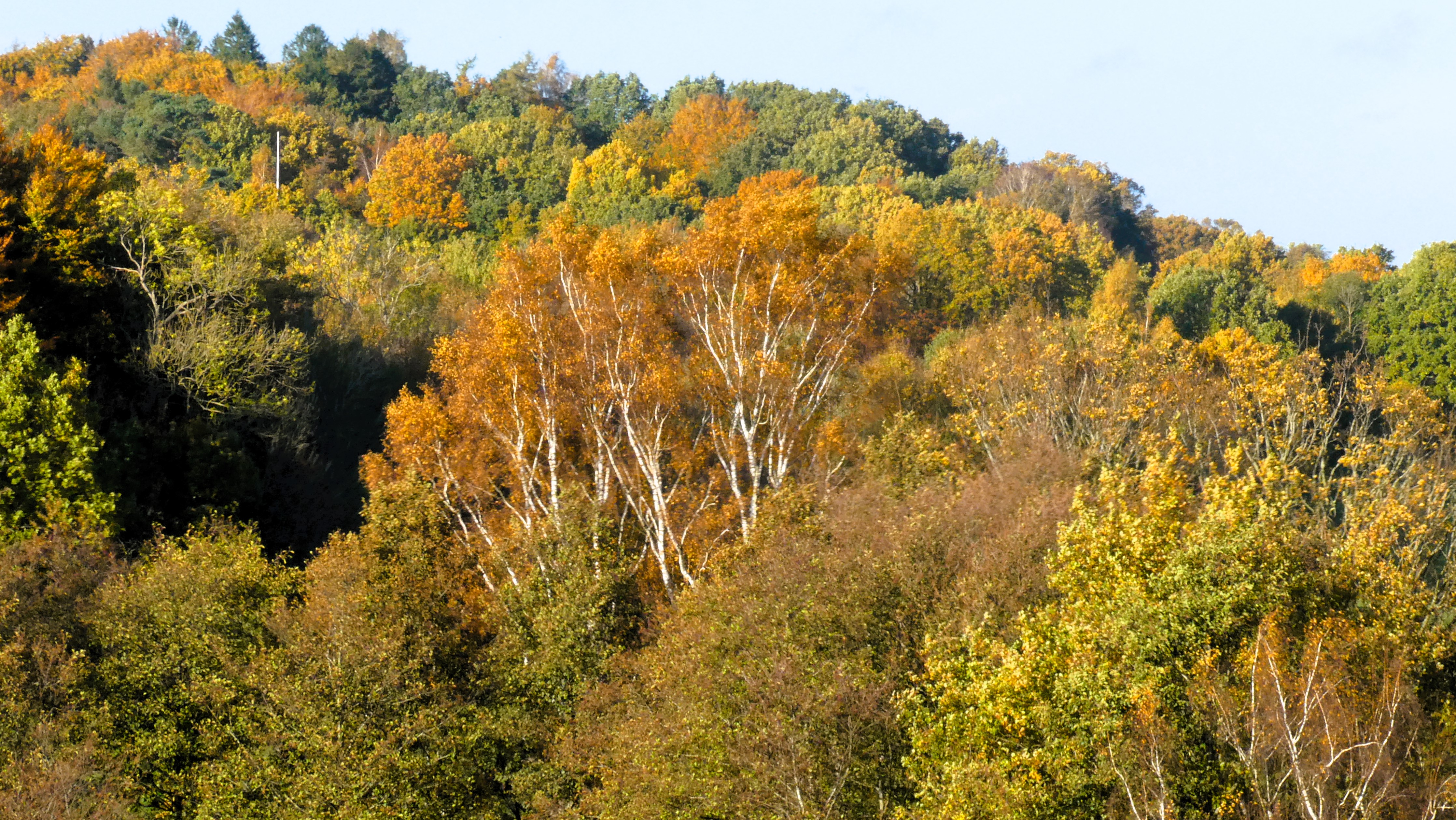
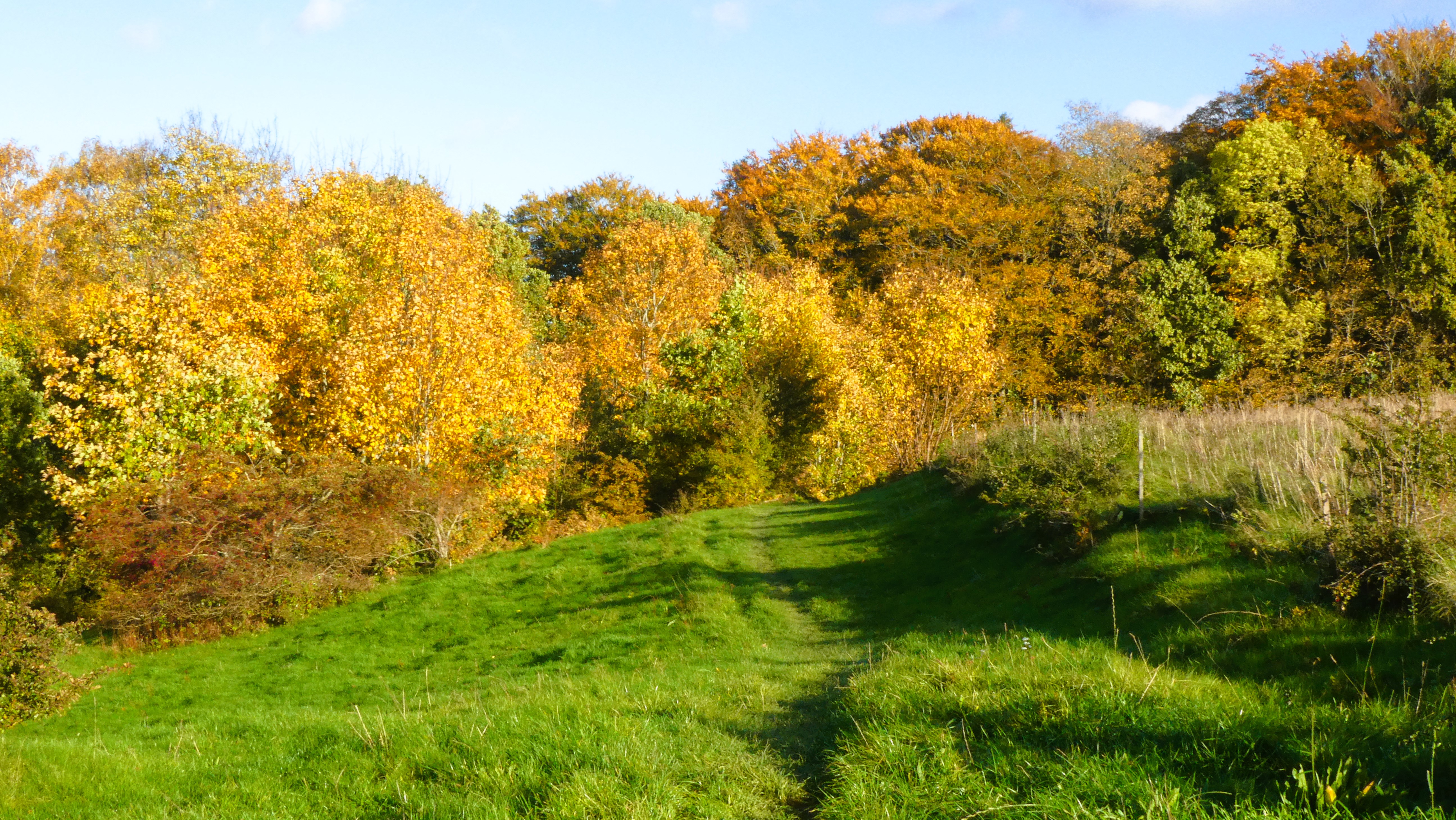
October 2023 had the largest amount of rain in Denmark for 25 years. But it is still possible to see the incredible autumn foliage. Not everything has been washed away by the rain.
Our walk in Bøllemosen is wonderful, and the smell of peat conjures up images of Norway.
Have to decide which part of Norway needs a visit next year. 😃
A Danish writer, Martin A. Hansen developed a thesis stating that:
There has been a trade route, a military route and a pilgrimage route across Zealand, Denmark. Through wetlands, bogs, meadows, fields and forests.
“Not just a wheel track or horse trail, but a wide range of paths with shifts from century to millennium. It is traces of the first mound builders, the masters of dolmens, the passage graves, it is the Stone Age monuments on the valley stretches down toward the river estuaries, it is the elevated Bronze Age mounds, and finally, the Iron Age and Viking Age settlement and burial sites.” 1
1 Lethrica, The Historical Societies in Lejre Municipality, Volume 3, No. 8.
Years ago I decided to examing this 64 km trail. It was a joyful exploration of an area enriched with historical tales and great beauty. The walks became a beautiful journey through time and place. Unforgettable visits to the Vikings’ old port, Vellerup Vig; the hills in Egholm Forest with a view of Dronningedyssen towards Orø; crossing through Kyndeløse Nordmark with pleasant farmers and happy cows. Through the atmospheric Ejby Ådal and further up to Dyrehaven with a view of Tempelkrog. Continuing through Rye with its many well mounds. Out through Hestehaven and a detour down to the beautiful Aastrup and Elverdamsåen. Past the always full church in Kirke Såby. Over Roskilde Bakke and Kirkebakke to Helligrende and on to Abbetved, where I can still hear the call of the crows in the crisp autumn air. The thunderstorm raged as I walked along the beautiful path towards Sagnlandet Lejre. I could make out the Sacrifice Marsh between the trees, and the thunderstorm added to the scenery. The beautiful Knapsø with the grey-throated loons which emit strange cries. Through Herthadalen, where the first constitutional meeting was held on the 5th anniversary in 1854. Further through the historic Gl. Lejre towards Ramsødalen.







 HANNA'S WALK
You must be logged in to post a comment.