I am thrilled by the Vikings’ remarkable ability to navigate without the aid of modern technology. They didn’t even have watches!
The Vikings relied solely on the sun, the moon, the stars, and the wind for navigation. They honed their skills by listening to sounds, observing the shapes of clouds, feeling the wind on their skin, and scanning the horizon during sea voyages.
In situations where land was obscured by fog or distance, they utilized other sensory cues such as scents or the presence of birds to guide them.
Their navigation techniques were truly unmatched! Moreover, they accomplished astonishing feats like sailing 5000 km across the North Atlantic in their open boats. It’s truly awe-inspiring!
Note
Lately, I have been fascinated by Vikings and their sailing. It inspired me to create an image of a longboat navigating through rough seas with the majestic mountains of Lofoten in the background. I’m not very good at painting, so I have teamed up with AI 🎁😊
I read an article in an outdoor magazine yesterday. They recommended a walk in the western part of Norway. A very steep and dramatic part of the country I would say!
Pretty much anyone could do the walk, and if you did it in the summer months it should be okay they claimed. It was, however, an advantage to have some experience with mountain walks.
This questionable recommendation made me think of the mistakes I made when I was heading for the mountains for the first time. But I also thought about my sister’s neighbor. He had an accident a few months after my own.
Jens and Synnøve have family in Norway. They are often in Stavanger during the holidays, as they have close family ties. On these visits to Norway, Jens has spent part of the holidays with a friend where they hike in unknown terrain, bringing a tent and provisions. He is used to navigating using a map and compass. Everyone considers him to be an experienced hiker.
The friend was prevented once, and Jens missed his mountain walk. He got a few days off from the family dinners and set off alone with his gear, map, and compass. Jens wanted to hike in unmarked terrain along the Lysefjord to a self-service cabin to spend the night.
He parks the car and starts his walk. It’s late summer, and the weather is very changeable. There is a full day’s walk to the hut, and it is well past noon before he decides to eat his lunch. Here he takes his time and enjoys the moment. When the food is eaten, he studies the map and plots a compass course.
After an hour and a half, he becomes unsure of his whereabouts. The fix points don’t match the landscape he’s in.
I don’t know if it’s because he’s concentrating on the map, but suddenly he trips and falls several meters, landing on a small isolated ledge on the side of the mountain. His glasses are shattered in the fall. This implies that he can faintly sense the contours of the landscape and glimpse some water below him. Jens finds his phone, which is luckily undamaged. He contacts the Norwegian rescue service and tells them what has happened and where he is.
He then calls the family to inform them. Now he can only wait. It has started to rain a little and visibility is reduced. About half an hour has passed when he hears a helicopter. It gets closer and then disappears. He can hear it far away, and finally, there is complete silence. He waits for a while, but nothing more happens.
Jens contacts the rescue service again. They can’t find him. He isn’t at the coordinates where he says he is.
Jens provides information about the new compass course after lunch and his problems with locating himself later. Now he waits and hopes. It won’t be long before darkness falls. He considers whether to jump into the water below him and swim to shore, but his poor eyesight prevents him from entertaining that idea.
The phone’s battery is also about to die. It feels like a very, very long time before he can hear the helicopter again. The rescuers get closer and closer, finally spotting him down on the ledge. One of the rescuers is lowered down and secures the harness, but on the way up, he almost slips out of the harness and the action starts over again.
It is an incredibly relieved Jens, who later reunites with his family in the evening. He is bruised after the fall, but hasn’t broken anything. Jens’s daughter has been on her way out into the mountains to look for her father after the phone call, but fortunately, the rest of the family has persuaded her to wait for the rescue service’s efforts, and it turned out to be a good idea. It was also a good thing Jens didn’t jump into the water. It would have killed him, he found out later.
The pictures are from the area where Jens was walking. We were on a walk in Hunnedalen once, and strolled around Lysefjorden. This is also where the tourist attraction Kjerag is located.
Jens doesn’t hike in the mountains anymore. I don’t know whether it is a promise to himself or to his family.
Experience is a good teacher, but he will send you some insanely expensive bills.
~ Minna Antrim
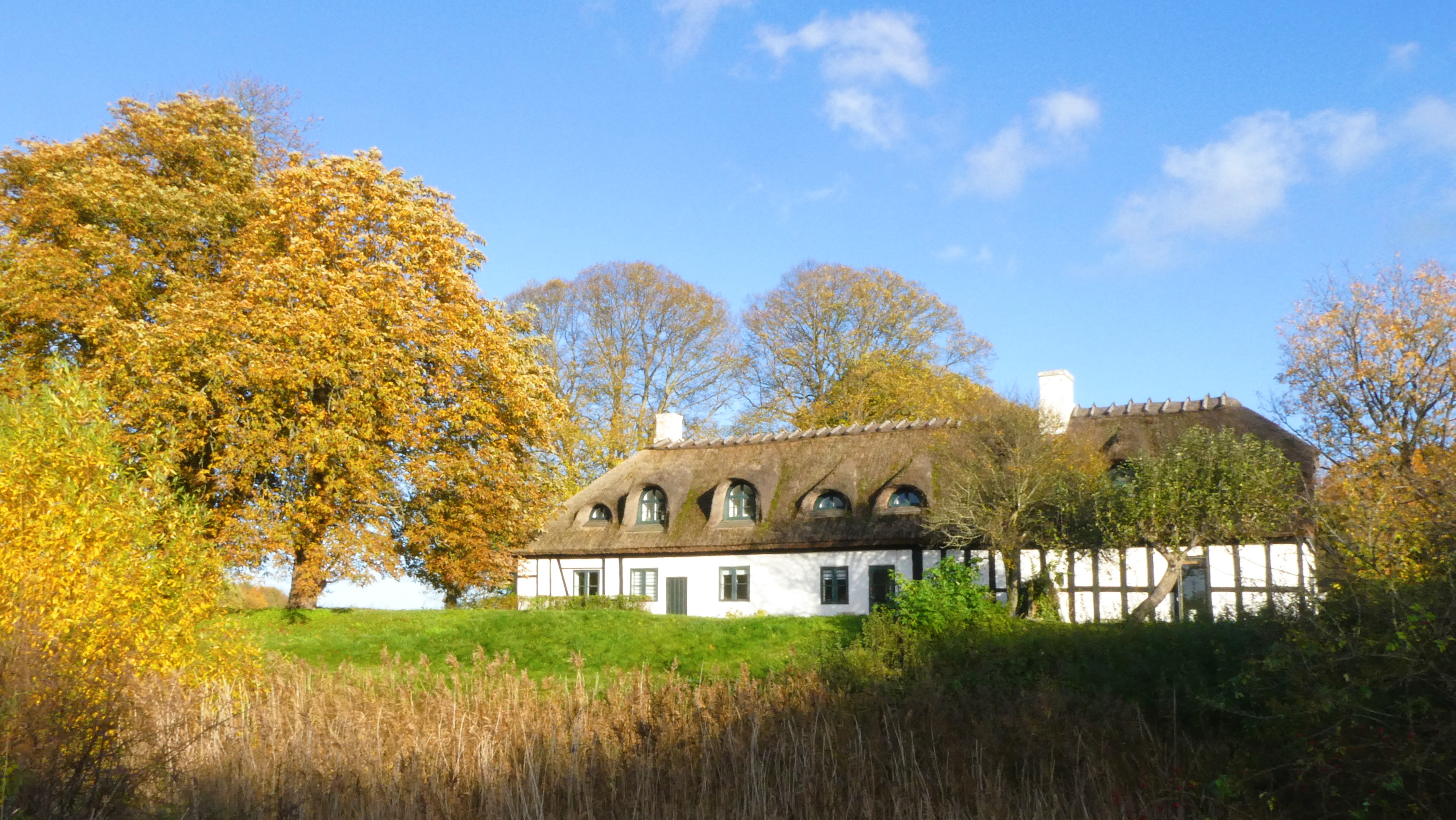
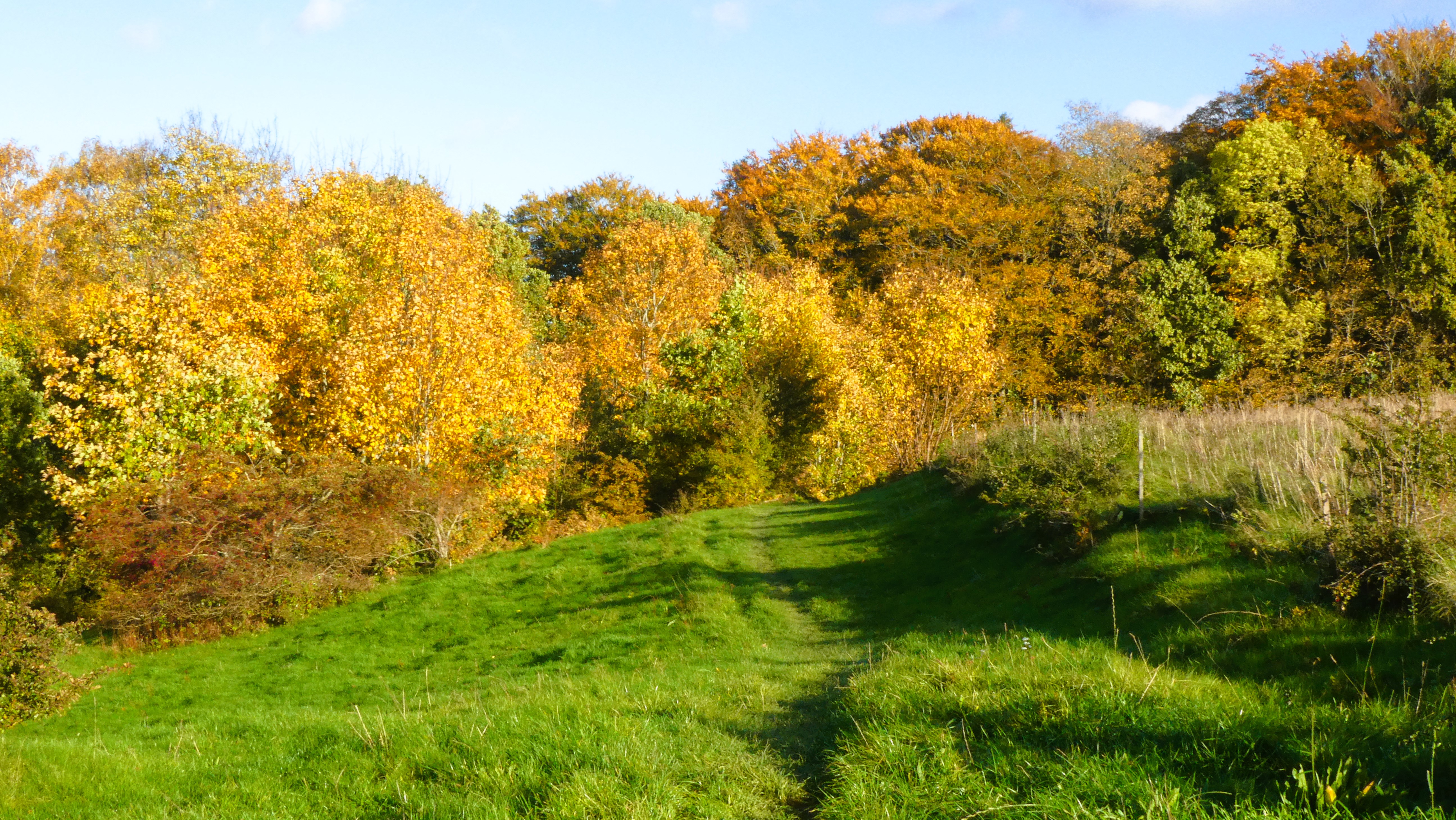
We are looking forward to this walk. Søllerød Naturpark always offers beautiful views. The walk passes the beautiful thatched farm: Rygård. To my surprise, I find that Olga, the last Grand Duchess of Russia, lived at Rygård after fleeing the Russian Revolution in 1917. There is always a story hidden somewhere. The exciting thing is finding it 😊😎
She moved to Rygård north of Copenhagen in 1930 with her husband and sons, after living in a small apartment in the Copenhagen. She enjoyed the peaceful and rural surroundings of Rygård, where she could paint and tend to her garden. She also befriended the local people and helped them with various tasks. She stayed at Rygård until 1948, when she left for Canada. Rygård is now part of the Søllerød Naturpark, a protected area of natural and cultural heritage.
Olga Alexandrovna was the youngest daughter of Emperor Alexander III of Russia and the sister of Nicholas II, the last tsar of Russia. She grew up in a tense political atmosphere, marked by several assassination attempts on her father and brother. She married Duke Peter of Oldenburg, in a loveless and unconsummated marriage. She later divorced him and married her true love, Colonel Nikolai Kulikovsky, with whom she had two sons. During the First World War, she served as a nurse and was awarded a medal for bravery. She witnessed the downfall of the Romanov dynasty in the Russian Revolution of 1917 and escaped with her family to Crimea, where they lived under constant threat of execution. Her brother and his family were brutally murdered by the Bolsheviks. She managed to flee Russia with her husband and sons in 1920 and joined her mother, the Dowager Empress, in Denmark. She moved to Canada in 1948, fearing Stalin’s regime, and died there in 1960. She was the last surviving member of the Romanov family.
Only 10 kilometers north of Copenhagen lies a magnificent forest called Dyrehaven. I have often written about the forest, because the experiences seem inexhaustible. Naturally, we have named paths, benches, and viewpoints with our own imaginative names ❤️
Today I took this picture of a beautiful young heron pausing, surrounded by white water lilies. It was a wonderful walk in Jægersborg Dyrehave after a massive rainstorm yesterday, and the day before yesterday… 😊






 HANNA'S WALK
You must be logged in to post a comment.