A walk in Rude Skov among raspberry and beetles.
‘There is a crack in everything.
That’s how the light gets in.’¹
– even through the dark clouds.


____________________________
¹. Leonard Cohen, Selected Poems, 1956-1968
A walk in Rude Skov among raspberry and beetles.
‘There is a crack in everything.
That’s how the light gets in.’¹
– even through the dark clouds.
____________________________
¹. Leonard Cohen, Selected Poems, 1956-1968
The rain is raining all around,
It falls on field and tree;
It rains on the umbrellas here
And on the ships at sea.
Robert Louis Stevenson


The lark trills to its heart high above the field. It disappears into the sky like a tiny dot, but the song is heard miles away and fills me with unspeakable joy. Nature is a gift!
Ethereal minstrel! pilgrim of the sky!Dost thou despise the earth where cares abound?Or, while the wings aspire, are heart and eyeBoth with thy nest upon the dewy ground?Thy nest which thou canst drop into at will,Those quivering wings composed, that music still!Leave to the nightingale her shady wood;A privacy of glorious light is thine;Whence thou dost pour upon the world a floodOf harmony, with instinct more divine;Type of the wise who soar, but never roam;True to the kindred points of Heaven and Home!By William Wordsworth


Happy walk ❤
A drop fell on the apple tree
Another on the roof;
A half a dozen kissed the eaves,
And made the gables laugh.
A few went out to help the brook,
That went to help the sea.
Myself conjectured, Were they pearls,
What necklaces could be!
The dust replaced in hoisted roads
The birds jocoser sung;
The sunshine threw his hat away,
The orchards spangles hung.
The breezes brought dejected lutes
And bathed them in the glee;
The East put out a single flag,
And signed the fete away.
‘Summer Shower’ by Emily Dickinson
Welcome to the month of June ❤
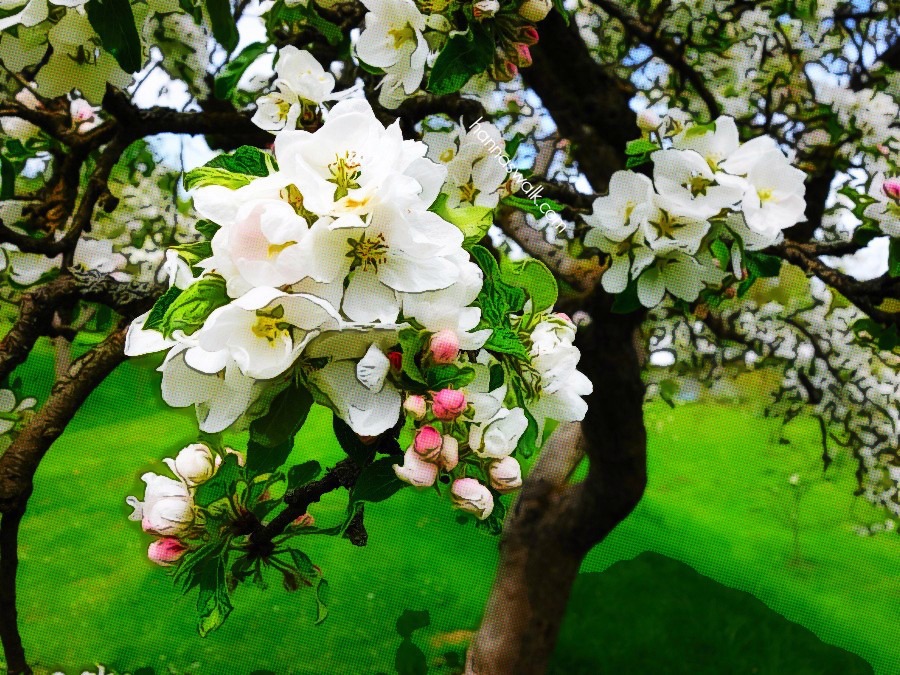

Have you ever been out in field and woodland, by streams and lakes, by a tree all in blossom or a hedgerow laden with berries – and just felt sure that you were not alone?
That’s how Teresa Moorey introduce her book: The Fairy Bible.
I’m tempted to read the book because I feel deeply happy to live in a place much alike.
In these days the hawthorn blossoms on the field, Hvidtjørnesletten and makes an unforgettable impression on all beings.
I have been out there several times this week to experience the atmosphere once again.
One evening the field was kind of sacred. The scent of blossoming hawthorn was intoxicating and the quiet soothing sounds from the animals made the place magical.
The deer moved imperceptible between the hawthorns while they graze.
People seemed affected and stood still or spread a blanket just to sit and be in the present. They were lowering their voice and that might have been because of the fairies.
They were afraid to scare them away.
Over hill, over dale,
Thorough bush, thorough brier,
Over park, over pale,
Thorough flood, thorough fire!
I do wander everywhere,
Swifter than the moon’s sphere;
And I serve the Fairy Queen,
To dew her orbs upon the green;
The cowslips tall her pensioners be;
In their gold coats spots you see;
Those be rubies, fairy favours;
In those freckles live their savours;
I must go seek some dewdrops here,
And hang a pearl in every cowslip’s ear.
‘A Fairy Song’ by William Shakespeare


Sweet was the walk along the narrow lane
At noon, the bank and hedge-rows all the way
Shagged with wild pale green tufts of fragrant hay,
Caught by the hawthorns from the loaded wain,
Which Age with many a slow stoop strove to gain;
And childhood, seeming still most busy, took
His little rake; with cunning side-long look,
Sauntering to pluck the strawberries wild, unseen.
Now, too, on melancholy’s idle dreams
Musing, the lone spot with my soul agrees,
Quiet and dark; for through the thick wove trees
Scarce peeps the curious star till solemn gleams
The clouded moon, and calls me forth to stray
Thro’ tall, green, silent woods and ruins gray.
‘Sweet Was The Walk’ by William Wordsworth
________________________________________________________________
Now the bright morning star, day’s harbinger,
Comes dancing from the East, and leads with her
The flowery May, who from her green lap throws
The yellow cowslip and the pale primrose.
Hail, bounteous May, that dost inspire 5
Mirth, and youth, and warm desire!
Woods and groves are of thy dressing;
Hill and dale doth boast thy blessing.
Thus we salute thee with our early song,
And welcome thee, and wish thee long.
John Milton


Before us great Death stands
Our fate held close within his quiet hands.
When with proud joy we lift Life’s red wine
To drink deep of the mystic shining cup
And ecstasy through all our being leaps—
Death bows his head and weeps.
by Rainer Maria Rilke


In the end, it’s not the years in your life that count. It’s the life in your years.
Abraham Lincoln
Happy Weekend ❤
_____________________________________
When the gold is on the willow, and the purple on the brier,
Not hoary hair or heavy care can still my wild desire
To race across the uplands, over Memory’s tender turf,
And dive out of my sorrows in the dogwood’s bloomy surf.
O blue were violets in our youth, and blue were April skies,
And blue the early song-bird’s wings, but bluer were the eyes
That, in that land of long ago, looked thro’ the window pane,
And saw the tulips nod to us amid the slanting rain,
Where all the dusk was glowing with our ruddy cottage fire,
When the gold was on the willow, and the purple on the brier.
When the gold is on the willow, and the purple on the brier,
The ducats of the dandelions have paid old Winter’s hire,
And sent him shuffling northward in garb of tattered snow;
White-tasseled birches after him their balmy odors throw.
Carousing in the bramble brake the brown bees, boozing, sip,
And up the river’s cataracts the shining salmon slip.
The schoolboy’s spirit leaveth him upon the weary seat,
And over loamy furrows leaps, with lightsome heart, to greet
The chipmunk on the mossy wall, the bullfrog in the mire,
When the gold is on the willow, and the purple on the brier.
When the gold is on the willow, and the purple on the brier,
He whistles the cantata of the blackbird’s noisy choir,
And all the murmurous music of a manumitted stream
Sings soft around his naked feet, where shallow ripples gleam,
As if the loops of crystal wherein the lad doth wade
Had threaded through the lilies of some Paradise arcade,
And little laughing angels had tucked their tunics high,
To plash across its limpid shoals before it left the sky;
And still it lilts the melody of lute, and harp, and lyre,
When the gold is on the willow, and the purple on the brier.
When the gold is on the willow, and the purple on the brier,
It may be sin to say it, but I fear that I shall tire
Of heaven’s eternal summer, and sometimes I will yearn
To see across the greening swale, a budding maple burn.
My soul can ne’er be satisfied where sweet Spring never hath
Her way along the mountain side or by the meadow path,
Where kingcups never catch the sun, or bluebells mock the sky,
Or trout beneath the foam-wreaths hide, or bass jump at the fly,
And, in some homesick moment, for a furlough I’ll inquire,
When the gold is on the willow, and the purple on the brier.
By Robert Mcintyre

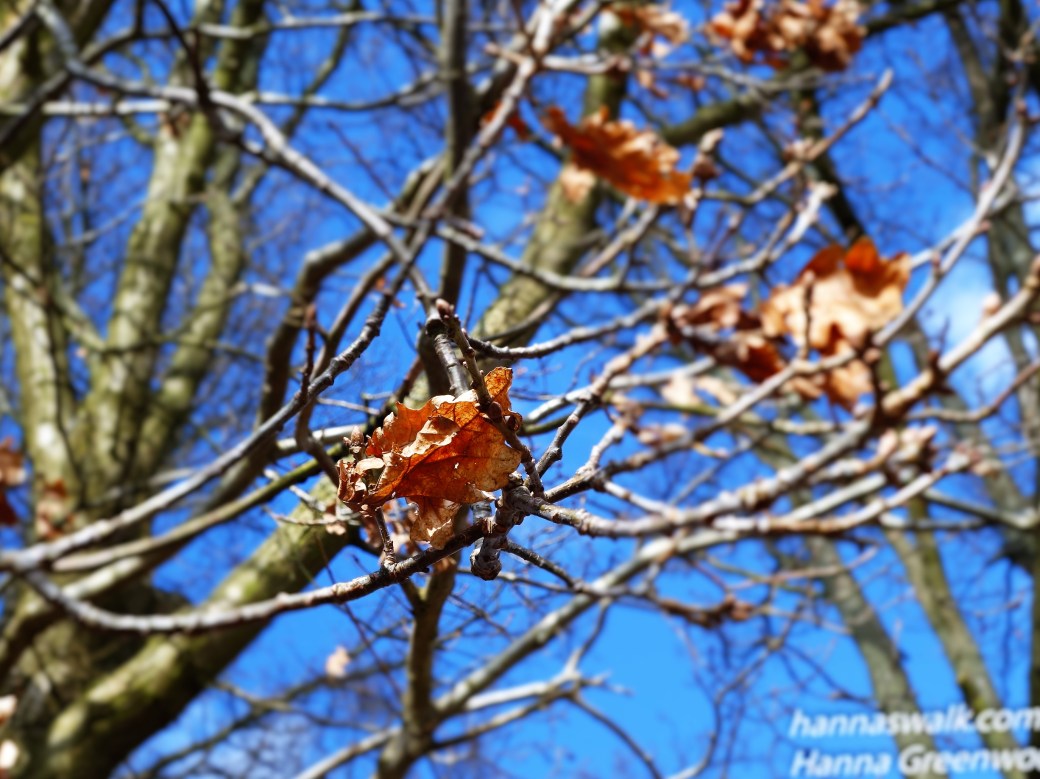
When all the other trees are bare,
Why do those last few oak leaves cling up there
under the cold blue sky?
Don’t they know when to die?
And to think: after the long freeze,
when warmth revives and fills these empty trees
with the green stuff of spring,
they’ll still be lingering,
brown, withered, and grotesquely curled,
with their dry whispers from another world.
Leaves, cling where you grew!
Maybe I’ll hang on too.
Survivors by Richard Moore


Two roads diverged in a yellow wood,
And sorry I could not travel both
And be one traveler, long I stood
And looked down one as far as I could
To where it bent in the undergrowth;
Then took the other, as just as fair
And having perhaps the better claim,
Because it was grassy and wanted wear;
Though as for that the passing there
Had worn them really about the same,
And both that morning equally lay
In leaves no step had trodden black.
Oh, I kept the first for another day!
Yet knowing how way leads on to way,
I doubted if I should ever come back.
I shall be telling this with a sigh
Somewhere ages and ages hence:
Two roads diverged in a wood, and I –
I took the one less traveled by,
And that has made all the difference.
By Robert Frost

Hmm! Which way?
Happy Walk and remember your packed lunch and map 🙂


Hvilken vej skal jeg vælge? Det er et spørgsmål, vi møder mange gange i vores liv. Især hvis vi vælger vores egen vej og ikke går med strømmen.
Nogle gange er der god grund til selvransagelse. Kunne jeg have gjort tingene anderledes? Hvis jeg bare havde gjort dette og hint.
Derfor fortolker mange mennesker Robert Frosts digt The Road not taken som en forspildt mulighed i livet, der kunne have resulteret i en stor glæde. Men Frost ville ha’ os til at opfatte digtet bogstaveligt.
Jeg kom til at tænke på digtet en søndag, da jeg tilfældigt mødte to mænd i Jægersborg Dyrehave. De kunne høres længe før de blev synlige.
De skældte hinanden ud. De kunne ikke finde vej. Det var varmt! Ja, tænk engang. En kvælende varme, der meget vel kan dæmpe hjernens aktivitet.
Da jeg nærmede sig, sank en af mændene hen over styret af cyklen af bare træthed.
De var gået ned på udstyr 🙂
Deres cykeldæk var på ingen måde egnet til det friske grus på stierne. Nu måtte de finde en asfaltvej. De ønskede at komme ud af parken, og den udvikling kunne ikke gå hurtigt nok. Én af dem havde Google map på sin telefon, men hver gang han foreslog en vej afviste den anden idéen. Jeg spurgte stille og roligt, om jeg kunne hjælpe, og deres brug af sproget ændrede på stedet.
Jeg gav dem et fysisk kort, og forklarede dem vejen i få ord. Det var en taknemmelig gerning. Det blev de så glade for, at det smittede.
Robert Frost havde en ven i England forfatteren Edward Thomas. De vandrede sammen i bjergene, og da Frost rejste hjem til USA, sendte han Thomas en kopi af “The Road Not Taken”.
Hensigten med digtet var ment som en kærlig mobning af den ubeslutsomhed som Edward Thomas havde vist på deres mange ture sammen.
Frost senere udtrykte ærgrelse, at hans læsere tog digtet mere alvorligt, end han havde tænkt.
God vandretur og husk madpakke og kort 🙂
 HANNA'S WALK
You must be logged in to post a comment.