The path meanders between rose hips and broom bushes. The sun is low, and the flowers glow in the evening sun.
We hear a faint engine sound from the sea and see the silhouette of three men in a boat. Majestic clouds that look like mountains tower up behind them.
It’s June’s unforgettable farewell, and a welcome to July. Enjoy summer and enjoy life ❤️
We passed the wreck on our holiday last week. The sight of it in the setting sun piqued my curiosity. How did the cement ship go down?. And what happened to the people aboard.
Our lovely hosts sent us a link about the history of the area including the story about the wreck . It was an interesting read. I have chosen to focus the story on the shipwreck itself. The narrative is sober, and that only seems to heighten the drama.
But I am warning you. This is what is called a longread:
On December 29th, 1947, the tugboat S/S Castor left Hundested Harbor with the barge ‘Brøns Odde’ of Copenhagen towards Randers. The barge was unusual while it was built of reinforced concrete in 1944 and not as usual of steel and iron or wood. It was therefore heavy and difficult to handle. The barge was ballasted according to the regulations for towing over open sea for such a vessel. S/S Castor had a crew of 4 and on the barge ‘Brøns Odde’ there were 2 men for maneuvering and handling the tow rope.
The weather was nice and the sea was calm. When they were clear of Hesselø, the weather changed very quickly. It blew up into a northerly blizzard and visibility dropped to zero. It was precisely in this difficult situation that the tow line snapped. The barge ‘Brøns Odde’ went into operation, and disappeared in the thickening snow.
As the S/S Castor had no radar and no radio, all communication between the two vessels was lost. There was a temporary clearing in the weather, and from S/S Castor they were lucky enough to spot ‘Brøns Odde’, and ascertain that it had dropped its anchor.
S/S Castor therefore sailed as close to the barge as they dared, and remained there while they waited for an improvement in the weather and, in particular, for the high and violent waves to subside. Instead of settling down, the storm increased in strength and ‘Brøns Odde’s’ anchor could not hold it in position. The barge drifted off in a south-westerly direction with its anchor dragging across the seabed. Due to the depth conditions and the strong current and sea, S/S Castor did not dare to follow. The barge therefore disappeared in the darkness and new snow.
When it dawned the next day, the S/S Castor immediately began searching for her missing tow, and it didn’t take long to find it. The barge was stranded at Yderby Lyng on the east side of Sjællands Odde, a peninsula on the northwest coast of Zealand. S/S Castor approached cautiously ‘Brøns Odde’, but getting all the way in was not possible.
When the Master of S/S Castor had formed an overview of the situation, he sailed Castor to Odden Havn, where a solid dinghy was hired, and informed the shipping company and authorities about what had happened. The S/S Castor then sailed with the hired dinghy in tow to the beaching site where the tug anchored and then established a connection with ‘Brøns Odde’ via the dinghy as soon as the weather permitted. There was no risk for the two crew members on the barge.
In the following days the lake was still strong and caused swells around ‘Brøns Odde’ as when the wind and current changed direction and began to work on the land, causing the barge to leak. Sea and current also prevented S/S Castor from trying to pull ‘Brøns Odde’ off the ground. Moreover, local fishermen and skippers estimated that the S/S Castor was too weak to carry out the towing work, and in that the locals were right.
The shipowners, the crew of both S/S Castor and ‘Brøns Odde’ and some men the shipowners had brought from Copenhagen, worked eagerly, partly to seal ‘Brøns Odde’, partly to pump it bilge. Here again, it proved very difficult to seal a leak in a vessel that was built of reinforced concrete. On 6 January 1948 the S/S Castor was moored for the night and with a lighthouse along the side of ‘Brøns Odde’, as it had been shown by soldering that the S/S Castor could well float to the outside, but with only 1 meter of water under the keel, a situation that was to become the indirect cause of S/S Castor’s sinking. A storm now arose from the west which stirred the sea, and great waves came against the two vessels. The driver of S/S Castor had been immediately reprimanded by the watchman and realized the acute danger the tow steamer was in.
The crew of S/S Castor quickly got the steam up and cast off from ‘Brøns Odde’ and steered out towards the open sea, to get clear of the now dangerous coast. At first it seemed that the S/S Castor would succeed in reaching deep water and riding out the storm from there. BUT?
Now the consequences of the fact that the S/S Castor had ventured into too shallow water became apparent. A few strong shocks from below up through the steamer told the crew with all desirable clarity that S/S Castor’s bottom had hit one or more large rocks. But still the steamer stood outwards with all the power that the machine could produce.
S/S Castor had received her fatal wound, although there were no more collisions with large rocks on the seabed, the ship had sprung a leak and the water rose rapidly in the engine room. S/S Castor’s Master let two men pump continuously, but the water ingress continued with ever-increasing force.
The engineer had to leave the combined engine and boiler room at the same time as the water reached the fire under the boiler and extinguished it. When the escaping engineer came on deck and reported to the Master, it was clear to him that the S/S Castor was going to sink, no matter what was done to prevent it. It was therefore about utilizing the steam that was left on the boiler, because the Machinist had not stopped the machine when he rescued himself from the engine room.
Resolutely, S/S Castor’s Master turned his ship towards land again, to try to sail it as far ashore, and as close to the shore as he could with the remaining steam in the boiler. But the S/S Castor did not make it far. When the Engineer had to leave his engine room, S/S Castor had arrived approx. 900 meters from the coast, and here the ship then turned around, but only reached a distance of approx. 55o meters from the shore when the machine stalled for lack of steam and the S/S Castor sank deeper and deeper into the water playing at deck level.
At the same time, the storm had dropped to a stiff gale, and turned to the north-east, which certainly did not benefit the landing attempt. It was at the last minute that the crew of the S/S Castor pulled the hired dinghy into the side of the tug and stepped into the dinghy and cut the tow rope to the S/S Castor. A few minutes later, the S/S Castor went to the bottom in approx. 8 meter depth. The crew managed to sail the dinghy into Brøns Odde and got aboard it with difficulty, thus saving their lives.
There was a terrible surf on the coast, which of course would be dangerous to pass in the dinghy, as the shipwrecked quickly got proof of, as the dinghy broke free from its mooring at Brøns Odde and drifted into the surf, where it was immediately transformed into stick fires . The shipwrecked were forced to stay on board the barge and wait for help from shore when tomorrow dawned.
The authorities ashore were well aware that something could have happened out at the stranded ‘Brøns Odde’ during the night of the storm. They did not fear the heavy cement laths, they believed that it would take more than a storm to destroy Brøns Odde’s solid cement construction, and to this day, it can be ascertained to be absolutely correct. Because Brøns Odde still lies where it laid to rest on the 30th. December 1947.
On the other hand, the S/S Castor and its crew were feared to the highest degree, because in contrast to the heavy cement lath, the S/S Castor was to a large extent comparable to a shuttlecock with which anything could very easily happen when it dared to go all the way into shallow water in such an unstable area in terms of weather and sea as was the case at Gnibenkrogen, where no one with local knowledge of the waters could dream of dropping anchor.
As soon as it was daylight again on the morning of January 6, 1948, many eyes and binoculars were directed towards the stranding site where ‘Brøns Odde’ lay just as it had the day before, but S/S Castor was gone and the sea empty. What had become of the S/S Castor, one asked themselves on land?
They did not remain in uncertainty for long, because help was signaled from ‘Brøns Odde’. The lifeboat from Yderby then went out to the wrecked barge, and took all five men on board and sailed them into Odden Havn to safety.
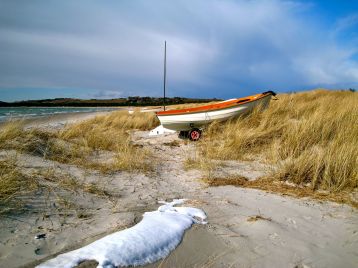
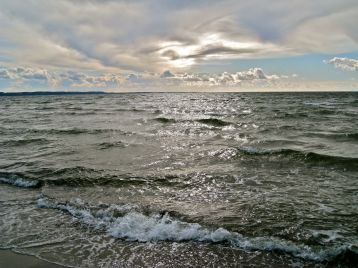
It was during an Easter that I took these pictures at Sjællands Odde and Sejerø Bugt. The beaches of Sejerø Bugt are incredibly beautiful. The sea is fresh and the sky is clear. I love the sea in all seasons, but the time around Easter is remarkable.
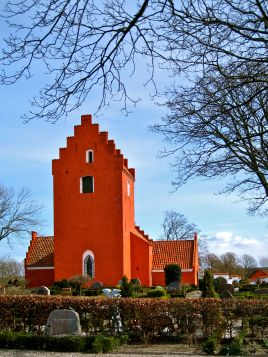
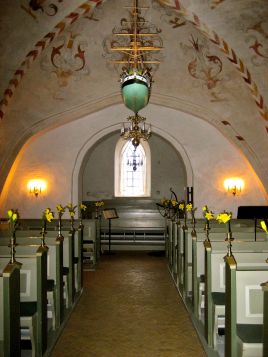
We went to see the wonderful Odden Kirke. The church is built around the year 1300. Three English pilots from the Royal Air Force are buried here.
They crashed over Sejerø Bay in 1944, and the bells were rung despite the Germans’ protests. The English pilots were honored by the entire local population, and the priest had to disguise himself as a gravedigger because he wasn’t allowed to carry out the burial for the occupying power.
Things turned out quite differently in 1808. At that time Denmark was at war against the English.
“Prince Christian Frederik – Denmark’s only ship of the line after the loss of the fleet in 1807 – was on its way from Helsingør to Store Bælt, in order to cover the transfer of French and Spanish troops to Zealand.
Prince Christian Frederik was pursued by three British ships of the line and two frigates.
In Samsø Belt, Prince Christian Frederik became aware that the English ships could not be avoided. It was decided to take up the fight in an attempt to get back to Sundet by taking advantage of good local knowledge and under the cover of night.
The battle began after sunset. Three hours later, the scuttled Danish ship of the line took the ground at Sjællands Odde and Prince Christian Frederik struck the flag.
Prince Christian Frederik had almost 200 wounded and dead – among the last Peter Willemoes (the hero from the Battle of Rheden in 1801).
A monument to Peter Willemoes, Dahlerup and Soland and many of their men is erected at the common grave of the fallen at Odden churchyard. They fell in the Battle of Sjællands Odde in 1808 against the English.
The day is solemnly celebrated every year with a memorial service in Odden Kirke and wreath-laying at the warrior’s grave and the memorial for Peter Willemoes.” * Forsvaret.dk
Vi besøgte Sjællands Odde og Sejerøbugten i en påske for år tilbage. Strandene er utrolig smukke, havet er friskt, og himlen er klar. Jeg elsker havet på alle årstider, men tiden omkring påske er noget ganske særligt.
Vi besøgte Odden Kirke den påske. Her ligger tre engelske piloter fra Royal Air Force begravet. De styrtede ned over Sejerøbugten i 1944, og der blev ringet med klokkerne trods tyskernes protester. De engelske piloter blev hædret af hele lokalbefolkningen, og præsten måtte forklæde sig som graver, fordi han ikke måtte foretage jordpåkastelsen for besættelsesmagten.
I det 18. århundrede var Danmark ikke så gode venner med englænderne. På de faldnes fællesgrav på Odden Kirkegård er rejst et monument over Peter Willemoes, Dahlerup og Soland samt mange af deres mænd. De faldt i Slaget ved Sjællands Odde i 1808 mod englænderne.
“Prinds Christian Frederik – Danmarks eneste linieskib efter tabet af flåden i 1807 – var på vej fra Helsingør til Storebælt for at dække overførslen af franske og spanske tropper til Sjælland.
Prinds Christian Frederik blev undervejs forfulgt af tre britiske linieskibe og to fregatter.
I Samsø Bælt blev Prinds Christian Frederik klar over, at man ikke kunne undvige de engelske skibe. Det blev besluttet at tage kampen op i et forsøg på at komme tilbage til Sundet ved at udnytte det gode lokalkendskab og i ly af nattemørket. Kampen begyndte efter solnedgang. Tre timer senere tog det sønderskudte danske linieskib grunden ved Sjællands Odde og Prinds Christian Frederik strøg flaget.
Prinds Christian Frederik havde næsten 200 sårede og døde – blandt de sidste Peter Willemoes (Helten fra Slaget på Rheden i 1801).
Dagen højtideligholdes hvert år ved en mindegudstjeneste i Odden Kirke og kransenedlæggelse ved krigergraven og mindesmærket for Peter Willemoes.” Forsvaret.dk
This story about the hawthorn trees is probably one of the most interesting discoveries I’ve stumbled upon while blogging. I have passed the hawthorn trees at the gate at Taarbæk several times, but without knowing the secret they hide.
This is my encounter with the secret several years ago:
I do not consider myself superstitious, but a week ago I was susceptible to the bizarre entertainment.
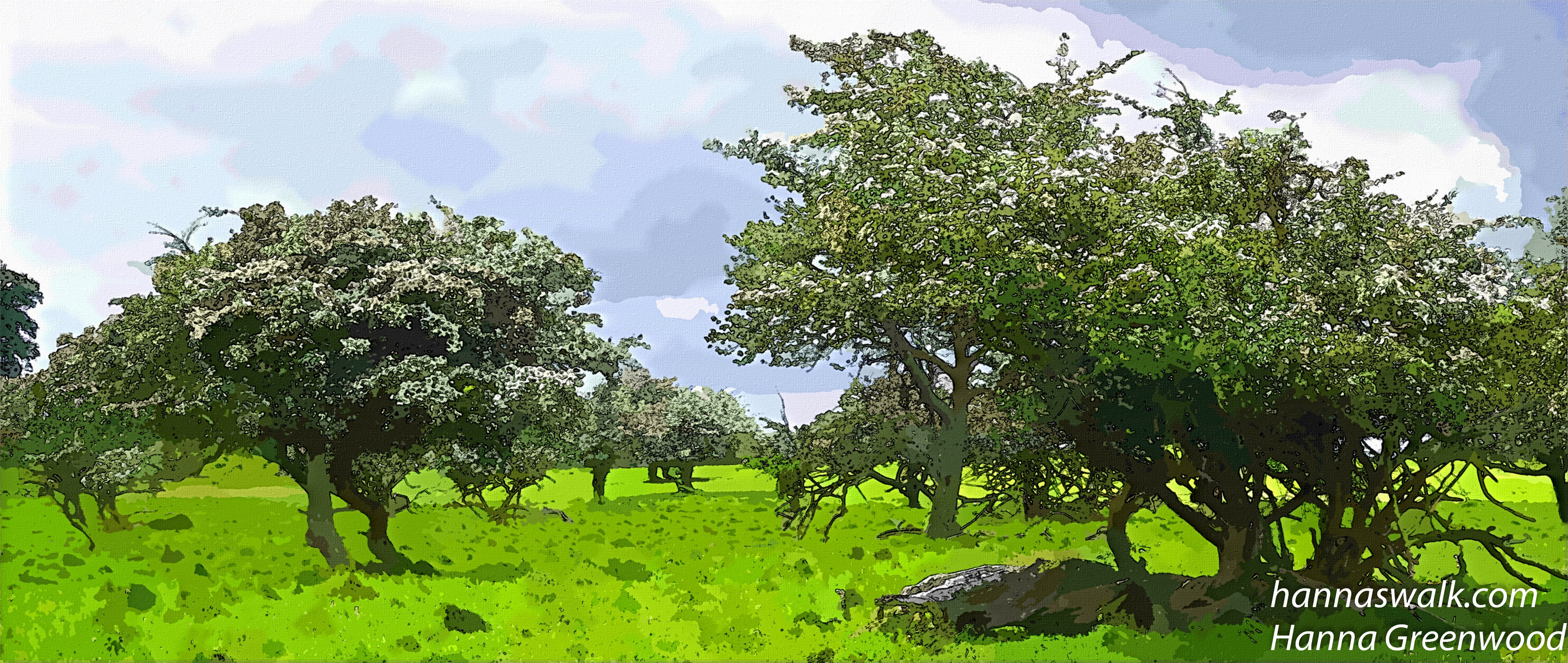
It all began with a stroll in the Deer Park on a field where Hawthorn represents itself in a large number. It was an amazing sight. Starry flowers gathered in endless white dome-shaped clouds buoyed by the ancient gnarled and wrinkled trunks.
I Goggled the Hawthorn, when I got home. I found that the Hawthorn on that particularly field is unique. It has crossed spontaneously with the single-seeded Hawthorn one and a half kilometers away at the gate down to Taarbæk. The trees stand close here. and they grow on a mass grave. Yes, you got it right.
People died during the cholera epidemic in Copenhagen in 1853, 4750 humans to be precise. Those who weren’t infected yet drove the victims on carts from Copenhagen to Taarbæk. They built a chapel and buried the poor people in a mass grave inside the Deer Park. To prevent the spread of infection from the graves the single-seeded Hawthorn, with its needle-sharp long thorns kept people and animals away from the graves. It aroused my curiosity and imagination. It was fascinating, and at the same time it also gave pause for thought. It is only a short time ago an Ebola epidemic was raging in Africa. Epidemics are always to be taken seriously.
The other day I visited the burial site. I went there late in the afternoon. It had just rained, it was cloudy and there was a gloomy atmosphere over the place. Maybe I needed a rest, or maybe it was my encounter with the woman that influenced me. Suddenly she was in front of me. Where did she come from? She was white-haired and pale. The eyes were dark and strangely tinned at the same time. She looked right through me and I stepped aside or she would have walked into me on the narrow path. A few hours earlier, I had read several stories about farmers forbidding the cutting of hawthorn. Cutting down a hawthorn means disaster for animals and people, and the old superstition is alive and well. I wondered if photography was a no go given the many legends and myths surrounding the trees. I took the chance and found a few motifs, after which I happily left the burial site. I was unusually tired when I got home and I attributed it to the long day I had.
At night I woke up with severe pain in my stomach. Yet I managed to fall asleep again. Next morning I had fever and abdominal cramps something that is quite unfamiliar to me. I was very tired and slept all the time. When the illness was at it’s worst I thought of the cholera victims and the woman I had met. I had to pull myself together, luckily I had a very plausible explanation for my illness.
At long last, my health improved and I have been out there again. The sun was shining through the trees, and tourists walked down from the cozy Taarbæk. There were no trace of the woman I met the last time.
The pictures ended with that warm evening light they deserve. Despite my story I will always think of the field with the Eremitage-Hawthorn as the romantic harbinger of spring ❤️
Hvidtjørnen og Døden
Denne historie om hvidtjørnetræerne er nok en af de mest interessante opdagelser, jeg er stødt på, mens jeg har blogget. Flere gange har jeg passeret tjørnetræerne ved porten ved Taarbæk, men uden at kende hemmeligheden de gemmer på.
Her er fortællingen om min oplevelse for flere år siden:
Jeg anser ikke mig selv for overtroisk, men for en uge siden var jeg alligevel modtagelig for den bizarre underholdning.
Det hele begyndte med en vandring på Hvidtjørnesletten i Jægersborg Dyrehave i maj måned. Det var et fantastisk syn, der mødte mig. Stjerneklare blomster samlede sig i endeløse hvide kuppelformede skyer holdt oppe af de ældgamle krogede og furede træstrammer.
Jeg googlede hvidtjørnen, da jeg kom hjem. Det viste sig, at hvidtjørnen på Sletten er unik. Den har krydset spontant med en engriflet tjørn, der står halvanden kilometer væk ved porten ned til Taarbæk. Træerne står tæt her. og de er plantet på en massegrav. Ja, I læste rigtigt.
Der døde 4750 mennesker under koleraepedimien i København i 1853. En stor del af dem blev kørt på kærrer fra København op til Taarbæk. Her byggede man et kapel og begravede de mange mennesker i en massegrav inde i Jægersborg Dyrehave. For at undgå spredning af smitte fra gravene plantede man den engriflede tjørn, der med sine sylespidse lange torne holdt folk og dyr væk fra gravene.
Det vækkede min nysgerrighed og fantasi. Det var fascinerende, og på samme tid gav det også stof til eftertanke. Det er kun kort tid siden en Ebola epidemi rasede i Afrika. Epidemier skal tages alvorligt.
Forleden besøgte jeg gravpladsen. Jeg tog derud en sen eftermiddag. Det havde lige regnet, det var overskyet, og der herskede en dyster atmosfære over stedet.
Måske var jeg træt, eller også var det mit møde med kvinden, der påvirkede mig.
Hun stod pludselig foran mig. Hvor kom hun fra? Hun var helt hvidhåret og meget bleg. Øjnene var mørke og sært fortinnede på samme tid. Hun så ret igennem mig, og jeg veg til side, ellers var hun gået ind i mig på den smalle sti.
Nogle timer forinden havde jeg læst adskillige historier om bondemænd, som til stadighed forbyder at fælde hvidtjørnen. Det betyder ulykke over dyr og mennesker, og den gamle overtro lever i bedste velgående.
Jeg spekulerede over, hvor vidt fotografering indgik i de mange sagn og myter, der eksisterer omkring træerne.
Jeg tog chancen og fandt flere motiver, hvorefter jeg med glæde forlod gravpladsen. Jeg var ualmindelig træt, da jeg kom hjem, og jeg tilskrev det den lange dag, jeg havde haft.
Om natten vågnede jeg med stærke smerter i maven. Det lykkedes mig dog at falde i søvn igen.
Næste morgen havde jeg feber og mavekramper noget, der er ganske uvant for mig. Jeg var meget træt og sov hele tiden. Da det var værst et par dage senere, tænkte jeg på koleraofrene og kvinden, jeg havde mødt. Jeg måtte tage mig selv i nakken, for heldigvis havde jeg en meget plausibel forklaring på min sygdom.
Nu har jeg fået det så godt, at jeg har været derude igen. Solen skinnede varmt mellem træerne, og turister kom gående nede fra det hyggelige Taarbæk.
Kvinden, jeg mødte den forrige gang, var der intet spor af.
Billederne er gjort om med det varme aftenlys, de fortjener. Jeg vil altid tænke på Eremitagetjørnen, som den romantiske forårsbebuder den er, fornyelsen efter vinterens endeligt.
Hvidtjørnen blev også brugt, da pesten hærgede Danmark af flere omgange. Sidste gang i 1711.
”Kirkegårdenes indviede jord kunne ikke rumme de døde, og man slæbte dem derfor ud på marken i store dynger for at begrave dem dér, og oven på en sådan grav plantede man en hvidtjørn for at advare efterslægten fra at røre ved dette sted. Endnu efter 500 års forløb står trindt omkring på vore marker nogle mærkværdige gamle hvidtorn under navn af »pesttorn«; de fredes af bønderne, thi de står på vore forfædres grave. Hele det vestlige Fyn er rigt på sådanne enkeltstående gamle hvidtorn.” Danske Studier 1970.
“They shut the road through the woods Seventy years ago. Weather and rain have undone it again, And now you would never know There was once a road through the woods Before they planted the trees. It is underneath the coppice and heath, And the thin anemones …”
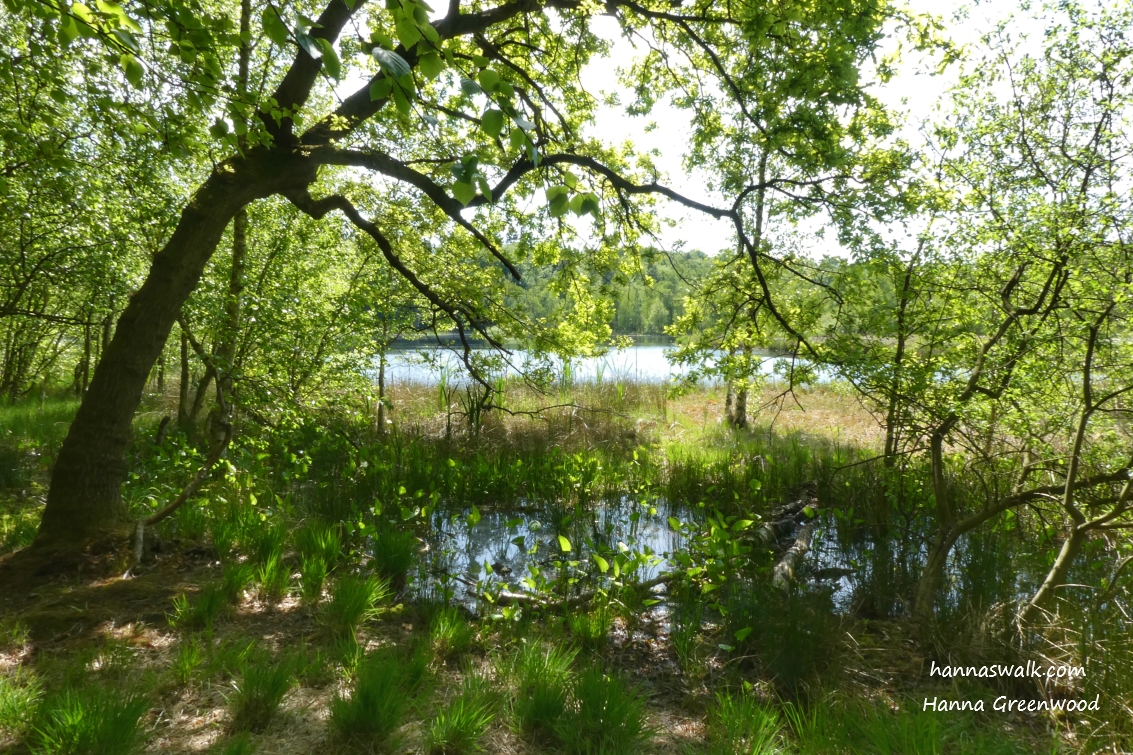
The forests are the most used leisure facilities in Denmark. 90 percent of all adult Danes go for a walk in the forest at least once a year * ❤️
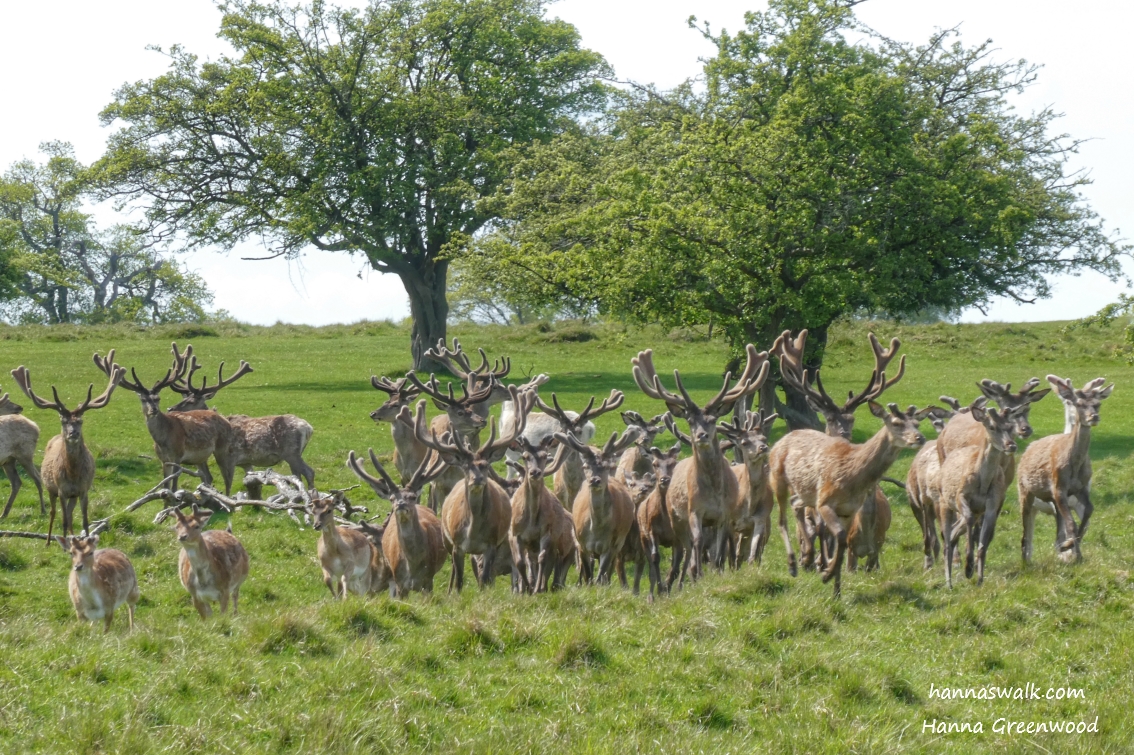
Something must have frightened the deer. Suddenly they came running straight towards me. It was really scary for a brief second until they turned away from me and calmed down. Whew!
We were walking in the wild part of a forest when we met a woman at a crossroad. She asked for directions and soon we fell into conversation about walks, nature and places.
She’d just finished an outstanding week’s holiday in England. An English friend had introduced her to The Lake District. Let me put it this way: The Lake District had got one more ambassador.
London is the only place I have visited in England. But one of my favorite books as a child was The Swallows and the Amazons by Arthur Ransome.
A few years ago I learned by chance that the stories weren’t only fiction, but some part had their origins in reality. Windermere and Coniston Water in Lake District were the focal point.
———————-
George Kitching owns Lakeland Walking Tales. If you miss inspiration for an exciting hike in The Lake District, then you will not go in vain on Lakeland Walking Tales
Mei shows her love for photography, travel, and hiking through her blog: Mei Photo Images. Jewels Of The English Lake District is a wonderful tribute to The Lake District.
Mike never miss a chance to go for a walk including glacier walking depending on what country he is in. Luckily, I can show you excellent pictures of Lake Windermere because Mike’s wife, Jude, loves sailing. Mike calls his blog: A Little Bit Out of Focus.
Steve Foster takes us around Buttermere Lake. Another wonderful place in Lake District. Steve calls his blog: Treks and Tors.
Take pleasure in finding your own paths and leave only your footprints behind. Happy walks 😍
Nature has many dramatic expressions from wonderfully mild summer weather to storm and thunder that roars between the mountain walls. I chose these lovely paintings on Wikimedia. Details coming up soon!
‘Coniston Water’ by Painter and illustrator, Harold Sutton Palmer.
Pearson C. – Watercolor – Landscape in the Lakes district 1867
Julius Caesar Ibbetson Lake Windermere Google Art Project
Grasmere Lake.
Alfred de Bréanski Snr. – Borrowdale
Skiddaw from Derwentwater by Richard Corbould
Henry Clarence Whaite Mountain mist, sun rise (Lake District)
Note
“Swallows and Amazons is a series of children’s books by the English writer Arthur Ransome. The series is named after the title of the first book in the series. The 12 books are about the adventures by groups of children during school holidays. Events mostly take place in England and Scotland between the World War I and World War II. The stories usually are about outdoor activities, especially camping, fishing and sailing.” * Wikipedia











 HANNA'S WALK
You must be logged in to post a comment.